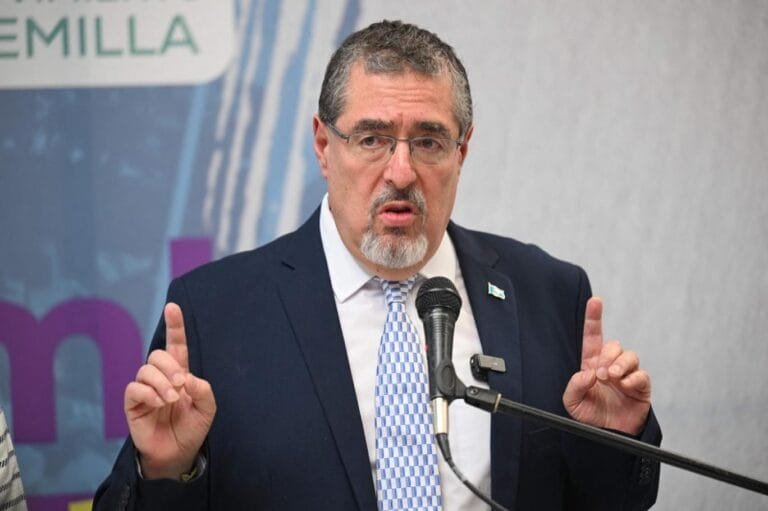
Guatemala – Guatemalan President Bernardo Arevalo declared a 30-day state of emergency across the country on Sunday. The move comes in an attempt to curb a wave of deadly attacks by criminal gangs, which have left eight police officers dead. The gangs also briefly seized control of three prisons over the weekend.
Exceptional measures to confront “terrorism”
In a televised address to the nation, Arévalo confirmed that this measure, effective immediately, would suspend certain constitutional provisions. This is intended to enable security forces to pursue the Barrio 18 and Mara Salvatrucha (MS-13) gangs. Both Guatemala and the United States classify these organizations as terrorist entities. They have also been implicated in contract killings, extortion, and drug trafficking.
Sequence of events: rebellion and revenge
This crisis comes after a series of serious security developments:
Hostage-taking: Gang-affiliated prisoners took 45 guards and a psychiatrist hostage in three different prisons.
Regaining control: President Arevalo confirmed that security forces had successfully regained control of the three prisons and ended the standoff.
The killing of the police officers: In response to the recapture of the prisons and the authorities’ refusal to transfer gang leaders to “less secure” prisons, criminal elements killed eight police officers in the capital and its suburbs on Sunday. This was an act of revenge.
deteriorating security context
Guatemala has been experiencing a growing security crisis since mid-2025. Gang leaders have been staging frequent prison riots to demand better conditions of detention.
Mass escape: Last October saw the escape of 20 leaders of the “Barrio 18” gang. Authorities have only been able to recapture 6 of them so far.
The statistics are grim: Guatemala recorded a homicide rate of 16.1 per 100,000 inhabitants last year. This figure is more than double the global average. As a result, the Arevalo government faces an existential challenge in enforcing the rule of law.
Declaring a state of emergency grants the military and police broad powers to conduct arrests and searches without warrants. This is a measure commonly used by Central American countries to counter the influence of transnational gangs.