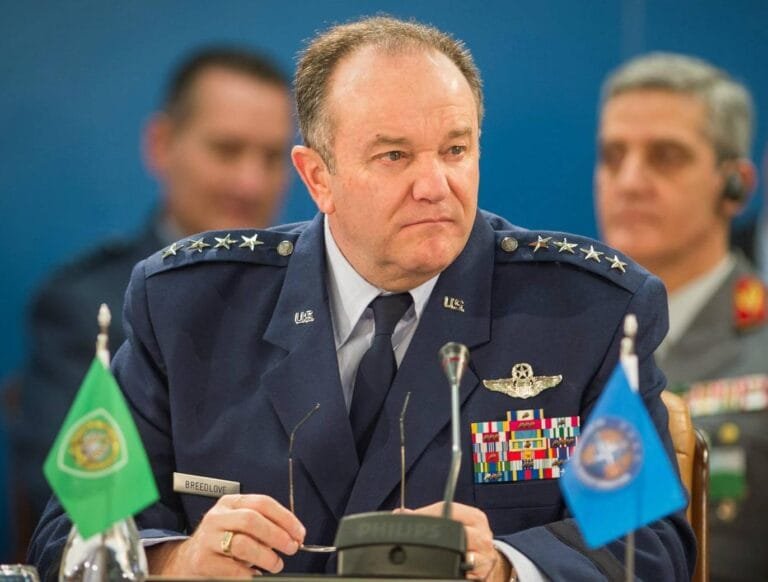
New York, USA – Retired Air Force General and former Supreme Allied Commander of NATO, Philip Breedlove, warned that the continued brutal crackdown on protesters in Iran could constitute a “triggering event.” He added that this event could shift President Donald Trump’s strategy from threats to direct military intervention.
Warning about the “triggering event”
In an interview with Newsmax’s “America Now,” Breedlove explained that the Iranian regime “holds the key” to avoiding escalation. He emphasized that Tehran could halt the slide toward confrontation by ending what he called “indiscriminate violence” against its own people. He added, “The Iranians have made promises to the world and to our president to stop this violence… If they keep those promises, they can expect the president to honor his commitments to de-escalate. If they renege, Trump will keep all options open.”
Pentagon moves on the horizon
Breedlove’s remarks come at a sensitive time, as reports have documented significant US military movements, including the redeployment of an aircraft carrier strike group and at least one attack submarine toward the Middle East. Reports have also indicated that the Pentagon is preparing to strike strategic targets, including ports, air defenses, and missile systems.
Trump and his allies: mutual pressure
The report indicated that Trump is balancing his messages to Iranian protesters that “help is coming” with pressure from regional allies (including Saudi Arabia, Qatar, and Turkey) who have warned him of the catastrophic consequences of any large-scale military strike. Trump recently praised Tehran’s decision to cancel mass executions on TruthSocial, calling it a positive step. However, Breedlove believes that the continued shooting of protesters in the streets and the collection of bodies are atrocities that the White House may not tolerate for long.
Difficulty in “setting goals”
Regarding the nature of any potential attack, General Breedlove noted that striking military installations is technically feasible. However, he emphasized that identifying targets that would actually change the behavior of the Iranian leadership or weaken its grip remains the greatest and most complex challenge facing military planners.