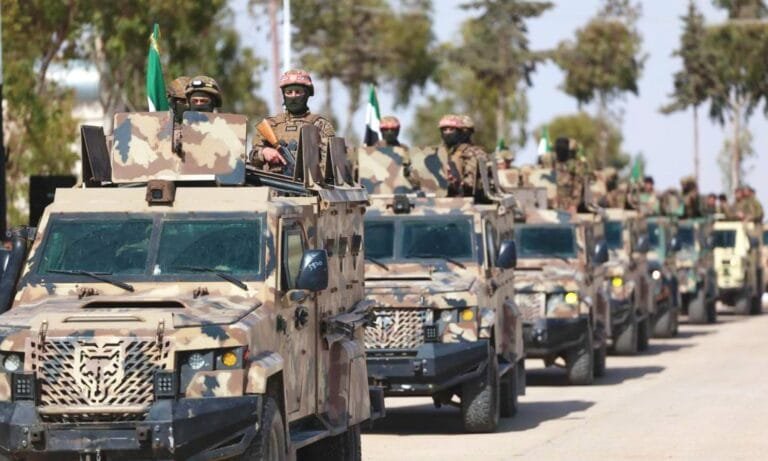
Damascus, Syria – Informed sources revealed that Syrian forces are preparing to launch a limited military operation targeting towns in the north and east of the country controlled by Kurdish fighters.
This move is intended to pressure their leadership to make concessions and return to the negotiating table with the central government.
These actions follow the breakdown of talks regarding the integration of Kurdish institutions into state structures.
According to the sources, the ongoing military movements reflect the widening rift between the government of President Ahmed al-Sharaa.
This government has pledged to reunify Syria after a 14-year civil war.
In contrast, the Kurdish administration is expressing concerns about the nature of the new government. It perceives the government as having an Islamist orientation and is demanding a form of expanded autonomy.
The sources indicated that talks held over the past few months, with US support, regarding the integration of Kurdish-run forces
and civilian institutions into Syrian state institutions, have reached a dead end by the end of 2025.
No tangible progress has been achieved.
This stalemate led to limited clashes in the city of Aleppo last week. In conclusion, the clashes ended with the Kurdish fighters withdrawing from some positions.
Serious repercussions
Military sources reported that the Syrian army has amassed reinforcements in several areas, including the vicinity of Deir Hafer west of the Euphrates River, as well as on fronts in Deir ez-Zor province.
The Syrian Democratic Forces (SDF) control key oil fields there. Damascus considers these fields part of the country’s economic sovereignty.
The sources also indicated that up to five military divisions could participate in any potential operation.
In response, the SDF warned of the dangers of escalation, stating that any military confrontation
could have serious repercussions for the fragile stability in the region.
Representatives of the SDF confirmed that efforts are underway, mediated by international parties,
to revive negotiations and prevent a slide into a wider conflict.
For its part, the United States called on both sides to exercise restraint and avoid a return to the cycle of violence.
It affirmed its continued intensive contacts with all parties with the aim of reducing tensions and resuming integration talks.
Observers believe that the coming weeks will be crucial in determining whether military pressure will lead to a political settlement.
On the other hand, some expect it to open the door to a wider confrontation. This confrontation could reshuffle the cards on the Syrian scene once again.