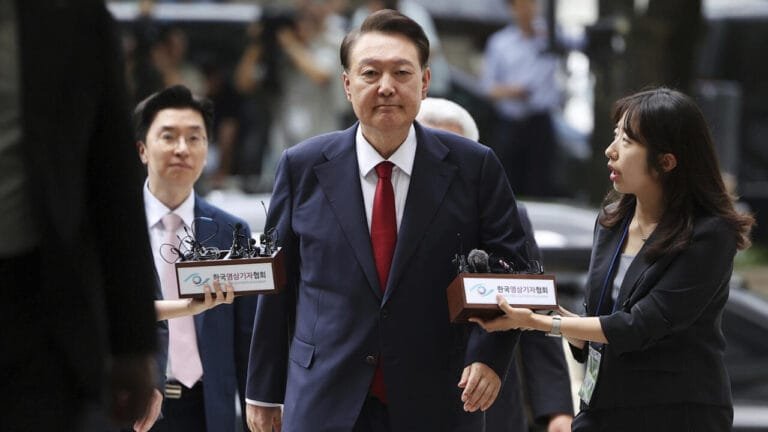
Seoul, South Korea – South Korean prosecutors on Tuesday demanded the death penalty for former President Yoon Suk-yeol, accusing him of sedition and attempting to undermine the constitutional order. This was achieved by imposing martial law in December 2014, a move widely seen as an attempt to cling to power and consolidate control over the state.
The prosecution’s demand came during the closing session of Yoon’s trial at the Seoul Central District Court. This occurred more than a year after he declared martial law on December 3, 2014, a move that triggered an unprecedented political and constitutional crisis in the country. The prosecution argued that the former president led a “full-fledged coup attempt” aimed at seizing control of the legislative and judicial branches and undermining the work of parliament and other state institutions.
Assistant Prosecutor Park Ok-soo argued that Yoon declared martial law to “remain in power longer.” He illegally used state resources that were supposed to serve the public interest. Park added that the gravity of the crime lay in its direct threat to the democratic system, the rule of law, and national stability.
Yoon, a former prosecutor who had never held elected office before winning the presidency in 2022, faces charges of insurrection and abuse of power. He briefly justified the imposition of the state of emergency by claiming the existence of “communist forces” threatening the country, a clear reference to North Korea—justifications rejected by parliament and the public.
Parliament voted on December 14, 2024, to impeach Yoon, before he was formally removed from office last spring and detained in prison since July, pending investigation and trial. Lawmakers also revoked the martial law decree just six hours after it was issued, declaring it unconstitutional.
The case stems from prosecutors accusing Yoon of orchestrating a coup attempt that included plans to seize control of parliament and election offices and detain his political opponents, in one of the most serious political crises South Korea has faced in decades.