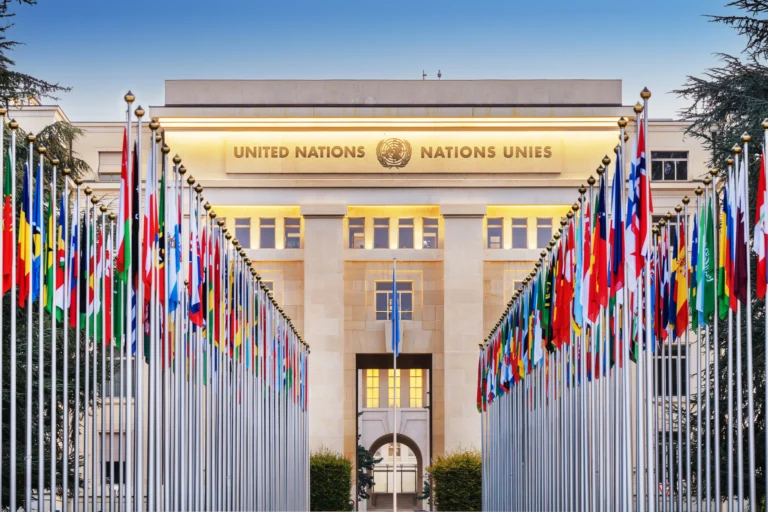
New York, USA – The United Nations General Assembly has approved a 7% cut to its 2026 operating budget, a move that reflects the severity of the financial crisis facing the international organization.
This is a result of declining funding and the delay of some major countries in fulfilling their obligations, most notably the United States.
Under the decision, the new budget will amount to approximately $3.45 billion, compared to $3.72 billion this year.
This is to fund the administrative and operational activities of the United Nations.
The cuts include eliminating about 2,900 jobs, as part of a broad plan to streamline spending and reduce bureaucracy, according to Bloomberg.
Unprecedented austerity measures
The United Nations has been suffering for months from a worsening liquidity crisis, which has forced it to take unprecedented austerity measures.
This includes reducing services within its headquarters in New York.
United Nations Secretary-General Antonio Guterres stressed that weak liquidity will remain a challenge.
This is “regardless of the size of the approved budget,” given what he described as the “unacceptable level” of financial arrears.
Guterres explained that most of the arrears date back to previous years, with the United States bearing the largest share.
Because it has not paid its $826 million contribution bill for 2025,
In addition to arrears estimated at approximately $660 million.
2$billion in humanitarian aid
Washington is the largest contributor to the United Nations’ regular budget, at 22%.
Despite the crisis, the United States recently pledged $2 billion in humanitarian aid to the United Nations.
This comes at a time when the administration of US President Donald Trump continues to reduce foreign aid.
In this context, US officials criticized what they described as the bloated bureaucracy within the organization.
They called for a focus on core tasks, foremost among them maintaining international peace and security.
The regular budget represents only a small part of the United Nations’ total spending.
Its affiliated agencies, such as UNICEF and UNESCO, are facing similar financial deficits.
This, in turn, prompted it to plan for a significant reduction in its expenses over the next two years.
This comes amid warnings of widespread humanitarian repercussions.