Manfred Weber, head of the European People’s Party group in the European Parliament, called for the deployment of military forces from EU countries to Ukraine.
This move reflects the growing debate within Europe about a direct military role in the war that has been ongoing for more than two years.
Weber, in comments reported by the German newspaper Die Zeit, said he hoped that
“Soldiers bearing the European flag on their military uniforms, alongside our Ukrainian friends, ensuring peace.”
He argued that the European Union could not rely entirely on the United States to achieve a peaceful settlement of the conflict.
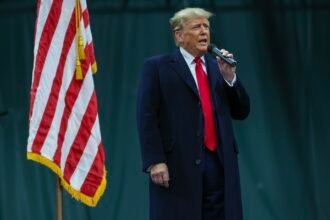
Only Trump can guarantee peace in Ukraine
The European politician explained that, in his opinion,
it was unrealistic to expect US President Donald Trump to take over alone.
The responsibility for ensuring peace in Ukraine rests solely with US forces.
He stressed that Europe is required to bear a greater share of the political
and military burdens in its geographical vicinity.
Weber’s remarks come in the context of previous European moves,
most notably the meeting held in Paris last September.
What is known as the “Coalition of the Willing” is led
by British Prime Minister Keir Starmer and French President Emmanuel Macron.
At the end of the meeting, Macron announced that 26 countries
had expressed their willingness to deploy deterrent
forces in Ukraine following a ceasefire, as part of what he described
as long-term security guarantees for Kyiv.
Russia opposes the deployment of any troops in Ukraine
In contrast, Russia affirms its categorical opposition to any scenario involving
the deployment of NATO or European forces on Ukrainian territory.
She considered such steps to be a dangerous escalation
and an impediment to reaching a political settlement.
Russian Foreign Minister Sergey Lavrov has previously described plans to send European troops to Kyiv
and Odessa as “dreams that have nothing to do with a peaceful solution.”
The debate within the European Union reflects a divergence of positions among member states,
between those pushing for a direct military role,
Those who prefer to limit themselves to indirect political, economic, and military support,
This comes amid fears that the conflict could escalate and turn into a wider confrontation with Moscow.