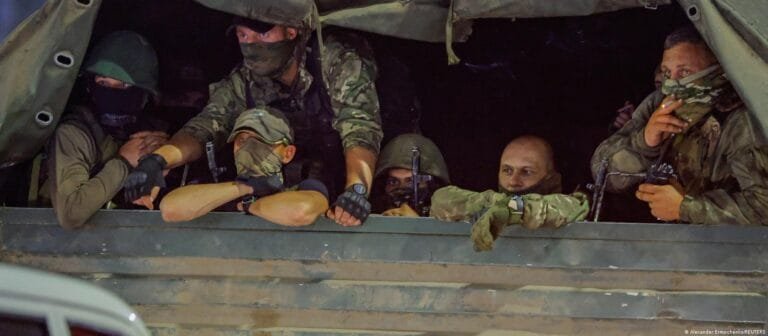
Baghdad, Iraq – The head of the Supreme Judicial Council, Judge Faiq Zaidan, emphasized on Wednesday that Iraqi penal law punishes with imprisonment anyone who joins the armed forces of another country without the Iraqi government’s approval. This was a clear reference to Iraqi fighters participating in the war between Russia and Ukraine.
Zaidan’s statement came during his meeting with National Security Advisor Qasim al-Araji. Also present at the meeting was the committee established by the Prime Minister’s Office to combat the recruitment of Iraqis to fight abroad, according to a statement issued by the Supreme Judicial Council.
Addressing the situation of Iraqi fighters abroad
The statement indicated that the meeting addressed the situation of Iraqis involved in the ongoing fighting in Ukraine. Zaidan clarified that Iraqi law imposes a prison sentence on anyone who joins the armed forces of a foreign country in any way without official permission.
This warning comes at a time when many Iraqi fighters who joined the fighting on behalf of Moscow since early 2022 have appealed to Iraqi authorities to repatriate them. However, the government has yet to issue any official response.
Iraqi soldiers on the doorstep of the Russian army
In previous statements to Shafaq News Agency, the Russian Ambassador to Baghdad, Albrus Kutrashev, stated that thousands of Iraqis are ready to join the Russian army if the opportunity arises. He noted that Russian law allows any foreigner residing in Russia with proficiency in the Russian language to formally contract with the army for a salary ranging between $2,500 and $3,000 per month.
Informed sources added that some tourism companies in Iraq indirectly contributed to attracting young people. This was done by organizing trips to Russia and Ukraine at discounted prices, sometimes with easy payment plans, under the guise of tourism.
Diplomatic warnings and recruitment risks
In a related development, the Iraqi Embassy in Moscow reaffirmed Iraq’s unwavering stance of neutrality. It warned the Iraqi community against heeding calls from anonymous sources claiming to represent the community and urging participation in the war.
For his part, the Russian ambassador acknowledged that Iraqi fighters had been killed and wounded. He indicated that Moscow had granted visas to the victims’ families “for humanitarian reasons.”
Economic and political dimensions
On another note, Kotrashev addressed the repercussions of US sanctions on Russian companies in Iraq. One consequence of these sanctions was the withdrawal of Lukoil from the country. Kotrashev criticized what he described as US interference in Iraqi decision-making. He also mentioned that Russia had granted former Syrian President Bashar al-Assad humanitarian asylum, indicating Russia’s continued role in regional affairs.