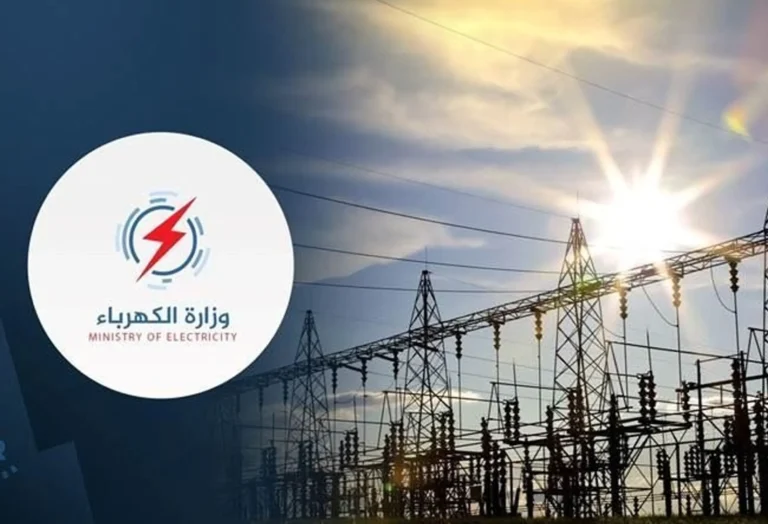
Baghdad, Iraq – The Iraqi Ministry of Energy and Electricity announced on Tuesday a sudden and complete halt to Iranian gas exports supplied to power plants,
resulting in a loss of approximately 4,500 megawatts from the national grid.
The hours of service provided to citizens in various governorates have decreased.
Reasons for the halt and the ministry’s position
The Iraqi Electricity Authority explained in an official statement that the Iranian side informed
it of the cessation of gas pumping due to an “emergency situation,”
without specifying the exact reasons for this interruption.
The ministry spokesman, Ahmed Moussa, indicated in a press statement that this stoppage caused
a decrease in local production from 22,000 megawatts to 17,000 megawatts currently.
Affected stations: The gas outage has paralyzed several vital production centers,
most notably the complete shutdown of the Shatt al-Basra station.
The Mansouriya power station in Diyala province has stopped operating,
and multiple production units in stations in the southern provinces have gone out of service.
Emergency plan: Alternative fuel
The ministry confirmed that “production is under control” despite the crisis,
and that it has begun urgent coordination.
With the Ministry of Oil to provide local alternative fuel to operate
the shut-down stations to ensure a minimum level of production.
However, the ministry spokesman stressed that this solution is “temporary,” saying:
“We cannot rely on alternative fuels forever.”
A deep-rooted energy crisis and ongoing suffering
This shutdown brings back into focus the “chronic dilemma” of Iraq’s electricity sector since 2003.
Despite tens of billions of dollars being spent on this sector, Iraqis still face prolonged power outages.
Especially during peak winter and summer loads.
Citizens’ alternatives
Faced with this shortage, citizens are forced to rely entirely
on private (diesel) generators that are widespread in residential neighborhoods.
These are estimated to number around 4.5 million large generators,
which burden Iraqi families with exorbitant additional costs.