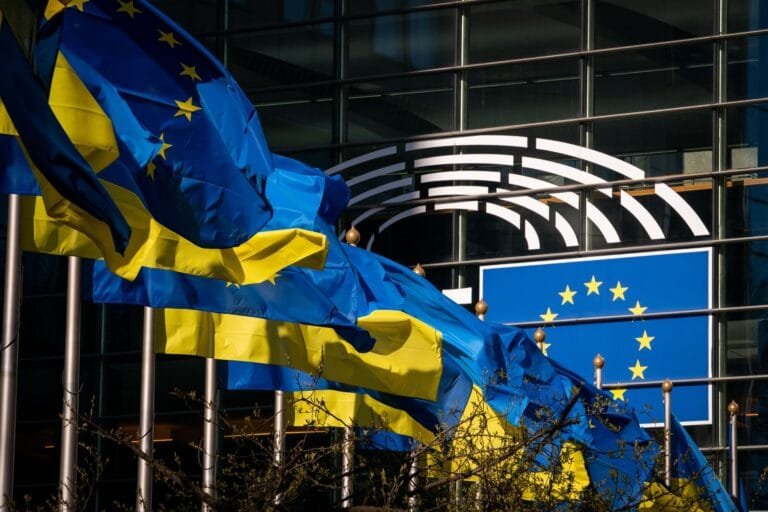
Brussels, Belgium – European Union leaders reached a historic agreement late Friday night to provide Ukraine with a €90 billion loan to cover its projected budget deficit for the next two years. The decision followed marathon negotiations that concluded with the selection of joint debt financing instead of the controversial seizure of frozen Russian assets.
A shift in strategy: Belgian “rationality” triumphs
Despite German pressure, led by Chancellor Friedrich Merz, to use the 200 billion euros of frozen Russian central bank assets, this plan collapsed in the face of opposition from Belgium (which holds most of those assets).
Belgian Prime Minister Bart De Wever expressed his satisfaction with the decision, describing the abandonment of the use of Russian assets as a “victory for rationality,” and comparing the previous course of action to the “Titanic,” which was about to sink in legal complexities and global financial risks.
Loan details and guarantees
Duration and purpose: The loan covers Kyiv’s financial needs for two years, as it is expected to face a severe liquidity crisis by next April. Repayment mechanism: European Commission President Ursula von der Leyen clarified that Ukraine will not be required to repay until Moscow pays war reparations.
Political exemptions: To ensure consensus, Hungary, Slovakia and the Czech Republic were granted exemptions from the obligation to share the debt, in order to avoid a “veto” that threatened to derail the deal.
Zelensky: “A moral and fair decision”
For his part, Ukrainian President Volodymyr Zelenskyy welcomed the support, emphasizing that placing his country on a solid financial footing would give it greater leverage in any future negotiations. He maintained that using Russian assets would have been “ethical and legal,” but securing financing through the loan remains a crucial step to protect the country from financial collapse in the first quarter of 2026.
Macron and Trump: Winds of negotiation are blowing across the continent
Alongside the financial agreement, a notable political shift emerged; French President Emmanuel Macron stated that it had become “useful” for Europeans to resume direct dialogue with Vladimir Putin in the coming weeks.
This comes at a time when US President Donald Trump is exerting intense pressure to end the war quickly, as a Ukrainian delegation is scheduled to hold new talks in the United States on Friday and Saturday to discuss “security guarantees” and what Washington will do in the event of a repeat of Russian aggression in the future.