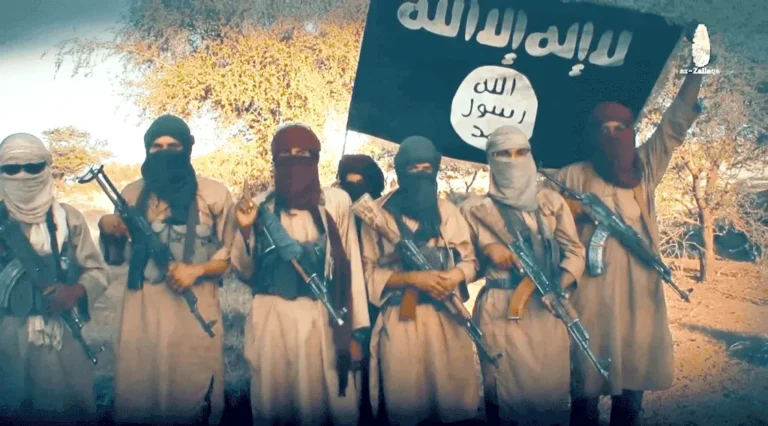
Bamako, Mali – Mr. Ben Bella, a leader in the Azawad Liberation Front (FLA), revealed the latest developments in the security situation in the Malian capital, Bamako. The al-Qaeda-affiliated group “Nusrat al-Islam wal-Muslimin” continues its siege of the city.
Targeting fuel convoys and vital facilities.
Ben Bella told “Sawt Al Emarat” in an exclusive statement that
the Macina Brigades are still imposing a siege on the entrances to the capital.
Meanwhile, the Azawad Liberation Front is closely monitoring the situation.
He added that the organization is not planning to storm the densely populated city,
which has a population of more than three million.
He pointed out that the main objective is to put pressure on the ruling
military council and weaken it politically by creating escalating crises.
The Azawad leader asserted that the blockade aims to stifle the local economy
and put pressure on the population.
This could lead to a popular uprising or a coup within the military establishment.
However, he pointed out the group’s limited ability to directly control the city
due to the strength of the local population.
Especially the Bambara ethnic group, which has historically
dominated the capital and its surroundings.
Escalation of the siege and its impact on the city
The jihadist group has been blockading fuel convoys since early September,
following restrictions imposed by the military council on fuel shipments to remote areas.
The blockade has so far resulted in serious material damage
and the closure of schools and businesses.
In addition to international evacuations, convoys and trucks were ambushed,
resulting in half of them being burned.
The militants seized large quantities of weapons, using drones in some attacks.
Group background and financial context
The Group for the Support of Islam and Muslims (JNIM) was founded
in 2017 as an alliance of five jihadist factions in Mali and the Sahel region,
declaring its allegiance to al-Qaeda.
It currently includes between 6,000 and 8,000 fighters spread across Mali, Burkina Faso and Niger.
The group finances its operations through raids, smuggling, kidnapping, cattle rustling, and extortion.
Social restrictions have been imposed in the areas under its control,
such as requiring women to wear the hijab and banning secular music.
Tipping the balance of power
For its part, the Malian military council, led by Colonel Assimi Goïta, has been in power since the 2021 coup.
It dissolved political parties in May 2025 and relies on the Africa Corps
(the successor to the Russian Wagner Group) to support its operations.
However, the escalating activity of the “Jama’at Nusrat al-Islam wal-Muslimin”
group has shifted the balance of power in northern and central Mali.
As the attacks became more deadly, data showed nearly 2,000 deaths up to
November 2025 as a result of the jihadist conflict.
The current blockade of Bamako is one of the most serious threats
to the stability of Mali since the 2021 coup.
This represents a crucial test of the military council’s ability
to manage crises in the face of armed jihadist groups.