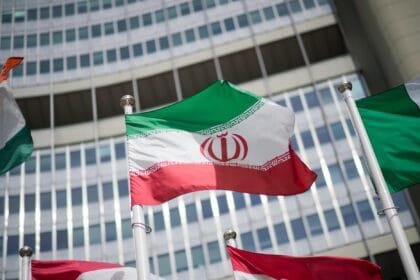
Washington, DC – Rafael Grossi, Director General of the International Atomic Energy Agency (IAEA), announced that the Islamic Republic of Iran still possesses enough highly enriched uranium and the technical know-how to build nuclear weapons, despite attacks targeting its nuclear facilities.
In an interview with France 24 on Thursday evening, Grossi indicated that the Iranian nuclear program had been “severely damaged” following the Israeli and American attacks. These attacks targeted the Natanz, Isfahan, and Fordow sites. However, he asserted that Tehran “still possesses enough enriched uranium and the technical capability to produce several nuclear weapons in the near future.”
The need for time to rebuild
The IAEA Director General estimated that Iran would need “a year or more” to rebuild its nuclear industrial and technological base. He noted that a significant portion of Iran’s nuclear materials remained at the same targeted facilities. “These materials would allow them to build numerous nuclear weapons,” he said.
Grossi also pointed out that “Iran’s nuclear activities today are very limited… Iran is not currently carrying out any enrichment, but that does not mean it will not do so in the future.”
Call for dialogue and improved cooperation
Grossi described the recent attacks on Iranian nuclear facilities as “a major shift from diplomacy to the use of force,” a setback to years of negotiations. He stressed that “the only lasting solution is dialogue, not attack and destruction,” emphasizing the need to return to diplomacy.
Grossi had previously warned in an interview with the Financial Times that the Iranian government must “seriously improve” its cooperation with UN inspectors. This improvement is essential to prevent an escalation of tensions with the West.
The IAEA Director General acknowledged that Tehran’s cooperation with UN inspectors had declined sharply after the 12-day war. He noted that Iran had passed a domestic law restricting its cooperation with the agency. He affirmed that technical contacts and negotiations were ongoing to resume the monitoring process.
Warning of vision loss
It is worth noting that the agency stressed the need to resume its vital verification activities in Iran as soon as possible. This includes monitoring a stockpile of more than 400 kilograms of highly enriched uranium. Grossi warned: “If we cannot return to inspections, we will lose sight of what is happening in Iran’s nuclear program. This is dangerous for the entire non-proliferation regime.”