Berlin, Germany – Lieutenant General Alexander Solfranc, head of the Joint Operations Command in Germany, warned that Russia has the military capability to launch a “limited-scale attack”
against the territory of NATO countries “starting tomorrow.”
In statements to Reuters, Solfranc, who oversees German defense planning,
confirmed that this attack would not be large-scale because of Russia’s preoccupation with Ukraine.
Rather, it will be: “(an attack) small, quick, and limited in scope, not large,
as Russia is too bogged down in Ukraine to undertake that.”
Russia’s combat capabilities have not been affected
Despite the heavy losses suffered by Russian ground forces in Ukraine,
General Solfrank stressed that Russia’s main combat capabilities remain substantial.
The Russian air force remains very strong, and its nuclear and missile capabilities have not been affected.
Likewise, Russia’s other fleets have not shrunk,
and Russia aims to increase its total number of soldiers to 1.5 million.
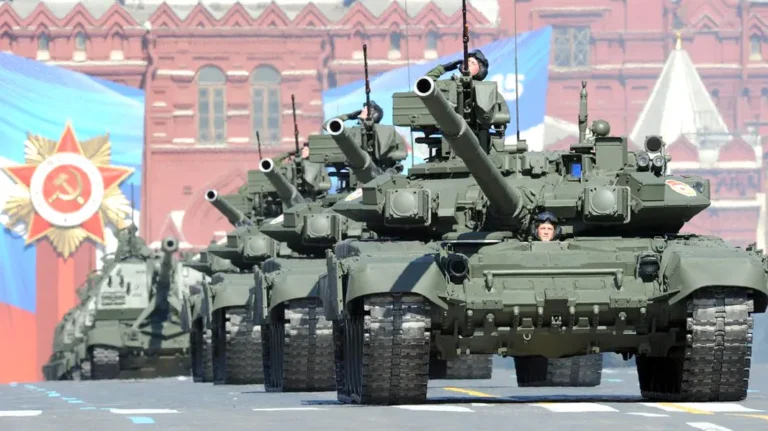
Solfranc noted that Russia has “enough main battle tanks to launch
a possible limited offensive as soon as possible.”
Hybrid warfare and the broader scenario
Solfranc pointed out that Moscow’s decision to attack NATO would depend on three factors:
Russia’s military strength, its military record, and its leadership.
The general also reiterated NATO’s warnings that Russia could launch
a large-scale attack on the alliance by 2029 if it continues to arm itself.
Solfranc described Russia’s tactics as “hybrid warfare”
(which includes drone incursions into Polish airspace and sabotage of infrastructure).
That its goal is to “provoke NATO and gauge its reaction,”
to spread fear and test the alliance’s resilience.
Solfranc concluded that the Russian attack was “within the realm of possibility,”
and that its occurrence “depends largely on our behavior.”
Referring to NATO’s deterrence efforts.
Strengthening German defenses
In response to this growing threat, General Solfrank pointed to German steps to strengthen its defenses.
Berlin has relaxed constitutional restrictions on debt to meet NATO’s goal of spending 3.5% of GDP
on defense by 2029 (increasing defense spending to around 160 billion euros).
Germany also plans to expand its armed forces by about 60,000 soldiers,
bringing the total number of military personnel to about 260,000.