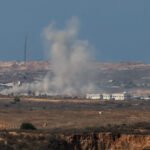
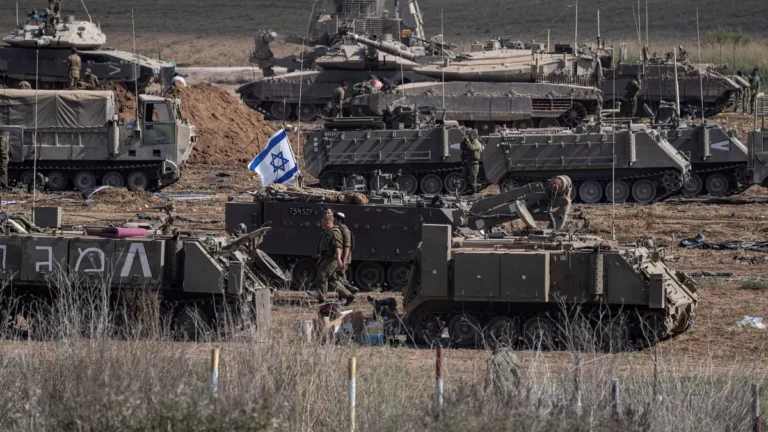

Cairo, Egypt – Israeli occupation forces launched a large-scale ground offensive on Gaza City on Tuesday. The offensive was supported by heavy aerial and naval bombardment. The Israeli military declared the operation the “main phase” of its war against Hamas. Witnesses and medical sources confirmed dozens of deaths and injuries since the early morning hours. Military activity was concentrated on the northern and eastern outskirts of the city. A limited tank incursion occurred in some densely populated neighborhoods, while the sounds of explosions continued to rock the Strip since midnight.
Humanitarian disaster
With the onset of the invasion, thousands of families were forced to flee south under extremely harsh conditions. Shelters in Rafah and Khan Yunis were full, while many displaced people were sleeping in the streets, schools, and mosques. The United Nations described the situation as catastrophic, stressing that asking hundreds of thousands of children to flee again was “inhumane.” Hospitals were virtually paralyzed and unable to accommodate any more wounded. Bodies were piling up in overflowing refrigerators, and some families were forced to bury their dead in makeshift graves.
International accusations
International criticism has escalated as images of destruction and civilian casualties continue to emerge. UN reports have pointed to violations that may amount to “crimes against humanity.” This places Israel in the crosshairs of accusations of genocide. Israel has denied these allegations, asserting that its operation targeted “Hamas armed strongholds.” It insists that it is acting in defense of its security. The escalating international controversy places Tel Aviv’s allies in a difficult position, especially with growing popular and human rights pressure to halt the operations.
Political position
The United States renewed its support for the operation, considering it aimed to undermine Hamas’s military capabilities. It affirmed that it would continue to support Israel politically and militarily. Meanwhile, Arab positions emerged calling for calm. Egypt, Qatar, and Jordan emphasized the need for an immediate ceasefire. They emphasized the opening of urgent humanitarian corridors to bring in food and medicine. Several European countries expressed concern about the expansion of the war, warning that it could lead to a wider regional explosion if the absence of political solutions continues.
Prime numbers
Local medical sources reported dozens of deaths and injuries in the first hours of the operation. Accurate numbers are difficult to establish due to the ongoing shelling and communications outage. Hundreds of thousands of civilians have been internally displaced for weeks amid repeated evacuation warnings. They now face a dire living crisis. The disruption to international aid delivery has led to severe shortages of medical and food supplies. There are warnings of a complete collapse of the health and humanitarian systems.
The next scene
Current indicators suggest that military operations will continue. They may expand deeper into Gaza City in the coming days. This will lead to a rise in the number of civilian casualties and an exacerbation of the displacement crisis. The international community faces a difficult test between mounting political pressure and urgent humanitarian demands. Civilians in Gaza remain the first and last victims of this ongoing war.