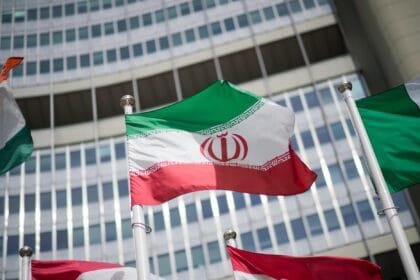
Vienna, Austria – Agencies The Director General of the International Atomic Energy Agency, Rafael Grossi, announced that a team of agency inspectors “returned to Iran” for the first time.
This has been the case since the Israeli and American strikes on the Islamic Republic’s nuclear facilities in June (June).
Tehran suspended its cooperation with the United Nations agency for not condemning the unprecedented war launched by Israel, starting on June 13 (June), in which the United States intervened by bombing three nuclear facilities.
“The first team of IAEA inspectors has returned to Iran,” Grossi told Fox News in an interview.
“We are about to start over,” he added.
“In Iran, as you know, there are several facilities, some of which were attacked but not others,” he said. We are discussing practical measures that can be taken to enable us to resume our work there.”
Grossi’s statements came on a day when Iran and the European Troika countries (Britain, France and Germany) held new talks in Geneva.
Through it, Tehran seeks to avoid the Europeans activating the “trigger mechanism” and re-imposing international sanctions on it.
Iranian Deputy Foreign Minister Kazem Gharibabadi said it was time for the European Troika to make the right choice and give diplomacy enough time.
Avoid the “trigger mechanism”
European countries are threatening to reimpose sanctions by the end of this month.
The “trigger mechanism” included in the 2015 nuclear agreement between Iran and major powers allows the re-imposition of UN Security Council sanctions on Tehran if it violates its obligations under the agreement.
The effects of the agreement became null and void after the United States unilaterally withdrew from it in 2018 and reimposed sanctions on Iran.
The latter responded a year later, beginning to gradually back away from its basic obligations under the agreement.
Tuesday’s meeting was the second between Iranian and European diplomats since the end of the 12-day war between Israel and Iran.
The war launched by Israel suddenly disrupted the nuclear negotiations between Washington and Tehran, and prompted the latter to suspend its cooperation with the International Agency.
Tehran confirmed that it is ready to cooperate with the agency “in a new way”, taking into account its security interests.
Western countries and Israel suspect that Tehran is seeking to possess an atomic bomb.
This is denied by Iran, which affirms its right to continue its nuclear program for civilian purposes.