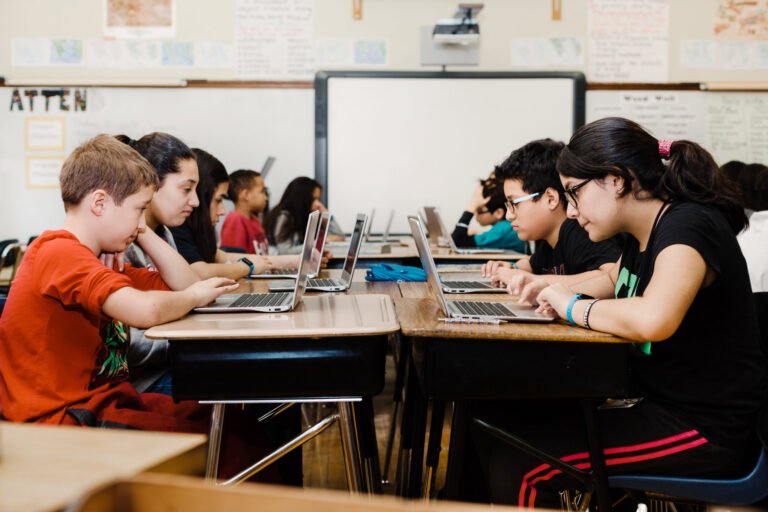
Washington, USA – A wide wave of controversy has recently escalated. Educational experts see an “indirect targeting” by tech companies. This targeting happens for students within the school environment. The companies use educational apps and digital platforms. These tools have become an essential part of the educational process. They are spreading significantly in a number of countries worldwide.
On the other hand, criticisms directed at these companies point to a serious issue. These companies are expanding their presence within schools smartly. This happens through various digital educational tools. They include homework platforms and cloud services. This gives them direct access to student data and behaviors. This has raised major concerns regarding children’s privacy. Fears have also increased regarding unethical commercial use of information.
Risks of Digital Surveillance by Tech Companies on Minors
In a related context, opponents of this digital expansion see something noteworthy. Increasing reliance on technology poses a risk. Despite its benefits in improving access to knowledge. It may open the door to “normalizing” data collection. This includes data from student minors. Some warn against turning the school environment into a space for surveillance. It is turning into an indirect and hidden digital surveillance space.
Furthermore, tech companies defend themselves strongly. They confirm that their services are designed to support the educational process. They also aim to facilitate learning and develop skills. They claim that collected data is subject to strict protection policies. The companies comply with local and international data laws.
Balancing Digital Transformation and Student Privacy Protection
On another note, proponents of digital transformation point to an important point. Technological tools have become essential for developing curricula. The need for them increased after the shift to hybrid education. Proponents confirm that the problem does not lie in technology itself. Rather, the problem lies in how to regulate its use effectively.
In conclusion, calls are increasing to set stricter regulatory frameworks. This is within schools to ensure the required balance. Technology must be utilized while protecting student privacy. Transparency regarding data use must also be enhanced. This controversy is expected to continue with the expansion of tech companies. Especially in light of artificial intelligence entering the education sector strongly.