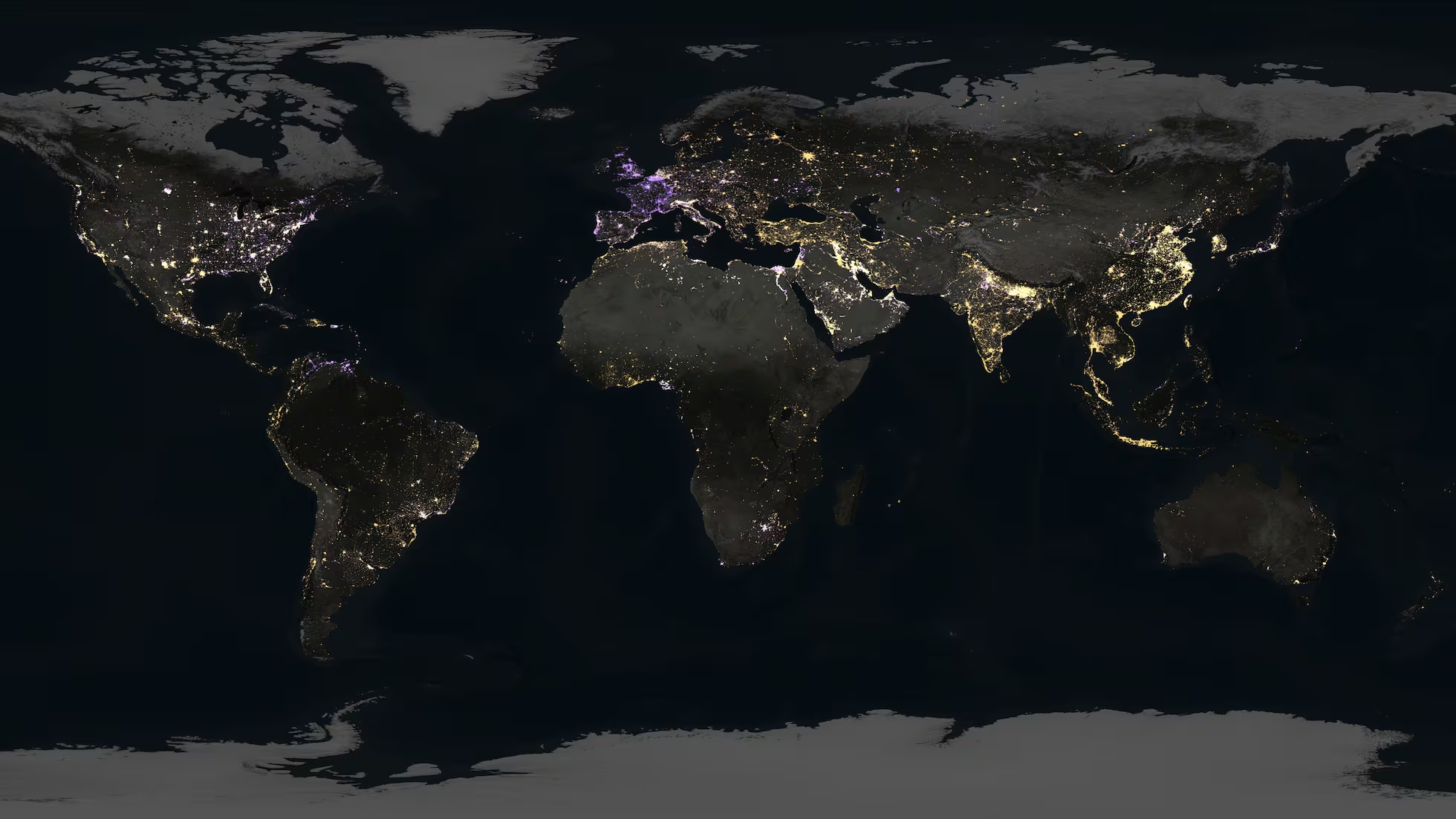
United States – Washington – A recent scientific study revealed alarming facts about our planet. Increasing global light pollution has led to a 16% rise in Earth’s brightness. This spike reflects an unprecedented expansion in the use of artificial lighting. Researchers confirmed that this phenomenon directly threatens environmental balance. Intense night lighting also affects the quality of life in major cities. Lighting levels continue to rise with rapid urban expansion worldwide.
Causes of the Rise and Impact on Star Gazing
The study attributed increasing global light pollution to excessive night lighting. Urban expansion in major cities contributed primarily to this crisis. Experts explained that this situation limits the clear visibility of stars. Astronomical observatories now face difficulties in monitoring celestial bodies. The night sky has become much brighter than it was in the past. This challenge represents a major obstacle for both amateur astronomers and scientists.
Damaged Ecosystems and Disruption of Animal Behavior
The impact of increasing global light pollution is not limited to astronomy. It extends to ecosystems and wildlife as well. Continuous lighting causes disruptions in the behavior of nocturnal creatures. Many animals rely on darkness to perform their vital activities. This imbalance threatens biodiversity in vast areas. Migratory birds and insects are also dangerously affected by excessive artificial brightness.
Human Health Risks and Sustainable Solutions
The study warned of health effects resulting from increasing global light pollution on humans. Continuous exposure to artificial light leads to severe sleep disturbances. It also causes a malfunction in the human biological clock. Researchers called for the immediate adoption of more sustainable lighting policies. This includes reducing unnecessary lighting and directing it downwards. This trend aims to preserve community health and restore the beauty of the night sky.