
Dubai, UAE – The Dubai Consumer Protection and Fair Trade Corporation, one of the institutions of the Emirate’s Department of Economy and Tourism, carried out an extensive inspection tour of one of the cooperative societies and the vegetable and fruit market in the Al Owayr area.
This is part of its proactive monitoring plan on the occasion of the holy month of Ramadan.
To ensure market readiness and availability of essential products, and to ensure that sales outlets comply with price regulations.
The tour focused on monitoring merchants’ commitment to price transparency, and ensuring that the prices offered to consumers are clear and match the actual prices at payment.
In addition to verifying the availability of products for which demand increases during the Ramadan season, and ensuring that there are no illegal practices that may affect market stability or harm consumer rights.
Ahmed Ahli, Acting Director of the Consumer Protection Department at the Corporation, confirmed that the Corporation has intensified its oversight preparations ahead of the month of Ramadan by implementing a comprehensive plan targeting various sales outlets.
Including central markets, wholesalers, retailers, shops, and grocery stores, to ensure market readiness and provide a safe and fair shopping experience for consumers.
He explained that inspection teams work directly with merchants to verify that the prices displayed on the shelves are consistent with the prices paid by the consumer.
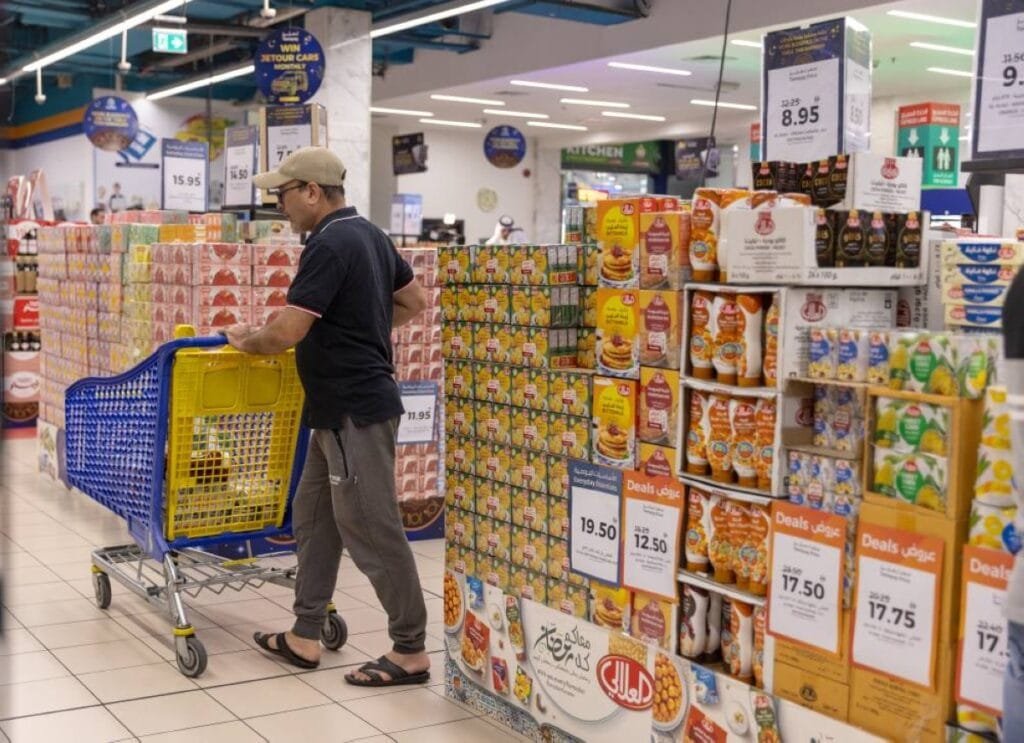
He confirmed that the institution was closely monitoring the absence of any price differences and that it was verifying in the field that the price on the shelf was the same as the price recorded in the sales system.
To ensure the highest levels of transparency and protect the consumer.
He stressed that there are nine essential products protected by law, and their prices cannot be adjusted outside the approved range.
They include rice, dairy, sugar, milk, cooking oil and legumes, along with other essential food products.
He explained that the institution takes immediate measures when any violations are detected, including obligating the merchant to adjust the price directly, or temporarily stopping the sale of the product until the situation is corrected.
In addition to imposing financial fines depending on the nature of the violation, he stressed that fines may reach up to 100,000 dirhams in cases of serious tampering or repeated violation.