Dubai, United Arab Emirates – Al Wathba National Insurance Company, operating in the UAE for more than 25 years, together with the awareness platform (RoadSafetyUAE), which provides content on road safety topics, issued an analytical study tracking traffic accident patterns during Ramadan in the country, based on an analysis of motor insurance claims during Ramadan 2025 (1–29 March 2025).
The study is based on an analysis of approximately 2,771 insurance claims, aiming to turn real-world data into practical indicators that strengthen road-safety awareness and raise safety levels on the roads.
Murali Krishnan Raman, Chief Financial Officer at Al Wathba National Insurance Company, said: “We are keen to share the key findings in a way that benefits individuals and the community,” explaining that the study aims to provide a clearer picture of risk hotspots during Ramadan and contribute to the safety of all road users.
For his part, Thomas Edelman, Founder and Managing Director of (RoadSafetyUAE), stressed the importance of heightened vigilance during the holy month, saying: “Drivers in the UAE should be more alert during Ramadan,” and calling attention to the increased likelihood of unexpected behaviours on the roads during peak times.
Peak hours: before iftar and after
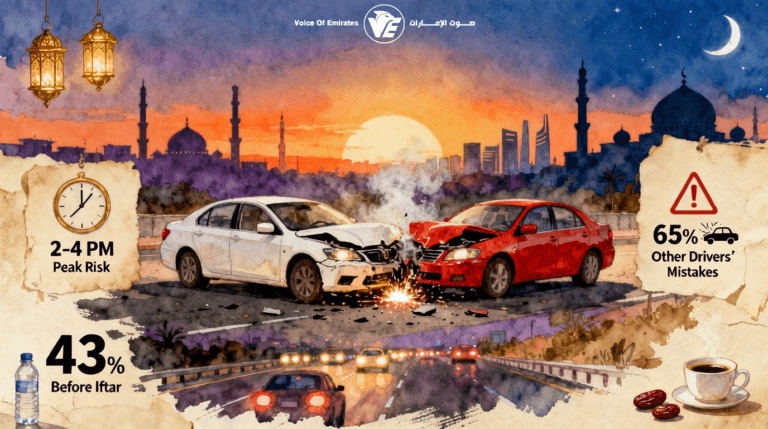
The analysis showed that risks rise in two clear time windows, with accidents clustering before iftar between 12:00 pm and 6:00 pm at 43%, followed by the post-iftar and suhoor period between 6:00 pm and midnight at 28%. The study also found that the 2:00–4:00 pm window is the most accident-prone time of day, accounting for 17%.
Days of the week and age groups: indicators of concentrated risk
Across the week, the highest accident rates were recorded on Mondays and Thursdays, at 17% each compared with other days, while Sunday was the lowest within the sample at 9%.
By age, drivers in the 36–40 bracket were the most involved, at 24%.
Who is at fault? A look at accident responsibility
The data indicated that 65% of accidents result from mistakes by other drivers, versus 35% due to self-error, reinforcing the importance of defensive driving and anticipating others’ errors, especially during Ramadan peak periods.
Why do risks change in Ramadan?
The study noted that lifestyle patterns shift noticeably during Ramadan, and fasting may lead to physical effects such as dehydration and low blood sugar, which can impact attention, focus, and emergency response. Changes in sleep patterns and meal timing may also increase fatigue, impatience, and distraction—factors linked to higher accident likelihood during peak hours.
Safety guidance: simple behaviours that reduce risk
The recommendations stressed that drivers should plan their schedules carefully and allow extra time to avoid rushing, wear seatbelts consistently, exercise extra caution at midday and around iftar, anticipate sudden moves by other road users, maintain a safe following distance, and avoid tailgating.
Avoid driving at sunset
The guidance also advised avoiding driving at sunset where possible, using vehicle lights at dusk, getting sufficient sleep, and stopping immediately when drowsy—or using public transport or taxis.
For non-fasting drivers and all road users, the recommendations called for greater understanding during the holy month and adopting defensive driving, while urging more vulnerable groups—such as pedestrians, cyclists, e-scooter riders, and motorcyclists—to stay extra vigilant and watch for unexpected behaviours on the road.