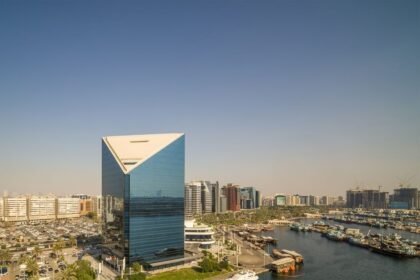
Abu Dhabi, UAE – The report «Global Investment Prospects 2026» issued by First Abu Dhabi Bank under the title: «Accelerated Transformations: Resetting Capital in Light of a Changing Global Economic System» stated that the year 2026 constitutes a pivotal stage in how to direct and allocate capital.
This is in light of the varying pace of economic growth, shifting monetary policies, and changing global risk dynamics.
He expected that global economic growth in 2026 would be modest and uneven, and that advanced economies would record growth of approximately 1.5%.
While emerging markets, especially in the Gulf Cooperation Council countries and Egypt, are likely to excel, recording growth rates exceeding 4%.
The report also expected that the UAE would lead the regional performance.
With an expected growth in actual GDP of about 5.6%, supported by economic diversification initiatives, structural reforms, and continued investment momentum.
The report reviews a global environment characterized by economic transformation, slowdown and disparity in the pace of monetary easing, and changes in capital flows.
Along with escalating geopolitical and technological complexities.
The report stressed the need to reset capital strategies and distribute investment portfolios, and identified the Gulf Cooperation Council countries as a reference pillar for growth and stability.
It also provided a structured framework for managing risks and seizing long-term investment opportunities across different asset classes and regions.
According to the report, 2026 is expected to be characterized by balanced and cautious global monetary policies.
He pointed out that, despite the decline in inflationary pressures from their recent record levels, they still constitute one of the most important risks in light of the escalation of geopolitical turmoil and the continued restrictions imposed on the supply side.
The report touched on interest rates, noting that interest rate cuts in the United States are expected to proceed at a slower pace than in 2025.
This is in light of inflation continuing to be the main macroeconomic risk, in addition to the escalation and continuation of geopolitical tensions.
The report stated that technological transformation, particularly in the areas of artificial intelligence, automation, and digital platforms, will contribute to accelerating structural transformations in wealth and asset management.
He pointed out that the global economic outlook for 2026 indicates continued growth in the global economy, albeit at a uneven pace, with changing growth drivers, shifting supply and demand dynamics, and declining safety margins.
economic diversification
The report stressed that economic diversification remains the cornerstone of building effective investment portfolios and managing risks.
In an environment characterized by structural changes, fluctuations and turmoil, diversified «portfolios» play a pivotal role in reducing the risk of losses.
While enabling investors to seize opportunities during different market cycles.
According to the report, global economic growth is expected to remain cohesive, with global GDP growing by 3.1% in 2026, compared to 3.2% in 2025.
While the outlook appears more optimistic at the regional level, supported by strong growth in non-oil GDP and continued political reforms.
He expects the Middle East and North Africa markets to provide attractive investment opportunities and play a growing role in promoting diversification within global portfolios.
The report highlights the accelerating pace of institutional transformation in the Gulf Cooperation Council countries, the development of regulatory frameworks, and the region’s growing role in allocating capital globally.
It also reviews how asset managers in the region are responding to the growing demand for professional investment solutions. Strengthening governance and expanding the scope of investment products.