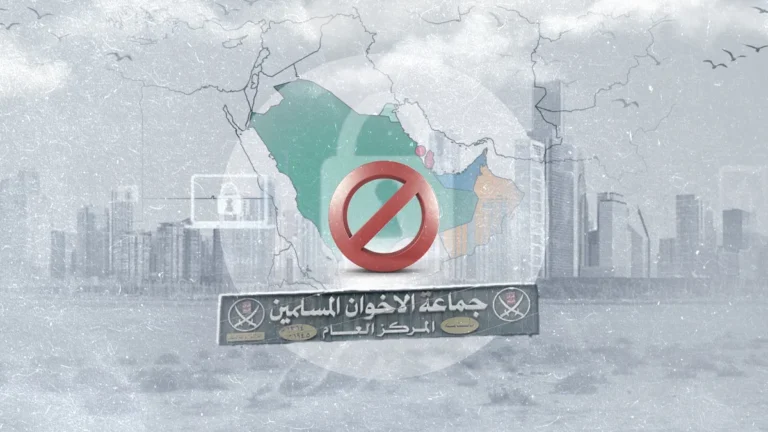
Abu Dhabi, UAE – The UAE’s welcoming of the US move to designate several branches of the Muslim Brotherhood as terrorist organizations represents a continuation of a clear political and security approach adopted by the UAE for years. This approach focuses on confronting ideologically driven organizations that use religion as a political tool and view the nation-state as an obstacle to their transnational project.
A reading of the timing and implications
This stance comes at a critical juncture, as the region witnesses rapid shifts in the approach to political Islam. This occurs amidst a growing international conviction that the Muslim Brotherhood, despite its diverse branches and varying methods, shares a single ideological and organizational structure. This structure, directly or indirectly, fosters environments conducive to extremism and instability.
From this perspective, the UAE views the US decision as a belated acknowledgment of a position Abu Dhabi was among the first to advocate. This position is based on the principle of not separating the group’s overt political activities from its organizational and ideological arms. Experience has shown that they operate within a single, long-term project.
The UAE and the vision of its political leadership
The UAE’s stance on the Muslim Brotherhood is linked to a strategic vision spearheaded by His Highness Sheikh Mohammed bin Zayed Al Nahyan. This vision is based on protecting the nation-state and reinforcing the concept of stability as a fundamental prerequisite for development. It emphasizes the rejection of any political project that exploits religion or undermines state institutions from within. The UAE leadership believes that the danger posed by the Muslim Brotherhood lies not only in its political practices but also in its ability to infiltrate society. Furthermore, it threatens to establish parallel organizational networks, which constitutes a long-term threat to social cohesion and national sovereignty.
From security to thought: A comprehensive approach
What distinguishes the Emirati approach to confronting the Muslim Brotherhood is its comprehensive strategy, which extends beyond security measures to encompass intellectual, religious, and legal dimensions. The state has worked to dismantle the group’s ideological discourse and promote a moderate religious discourse that rejects politicization and emphasizes the values of citizenship, coexistence, and respect for the rule of law. In this context, the UAE does not view the designation of the group as an end in itself, but rather as a means within a broader framework aimed at drying up the sources of extremism. It also aims to prevent its resurgence under new names or different political and media fronts.
Regional and international repercussions
Politically, the UAE’s welcoming of the US decision strengthens the chances of building a more cohesive international stance against the Muslim Brotherhood. It also provides countries affected by its activities with broader political and legal cover to take similar measures. Furthermore, this development may limit the group’s ability to maneuver between capitals or exploit international differences to present itself as a “moderate” political actor. The UAE believes this rhetoric has lost credibility in light of the realities on the ground.
Between stability and chaos
In essence, the Emirati position reflects a political conviction that the conflict with the Muslim Brotherhood is a conflict between two projects:
The national state project is based on law, institutions, and development.
The group’s project is based on indoctrination, secret organization, and the use of religion to achieve political gains.
Therefore, the UAE believes that resolving this conflict does not serve the interests of any one country, but rather contributes to strengthening regional stability and reduces the opportunities for chaos fueled by ideologically driven organizations over the past decade.