London, Britain – The United Kingdom is experiencing one of its most severe cold spells in years. A polar air mass has gripped the country, turning London into a sea of ice and causing widespread disruption to education, transport, and healthcare.
London below zero: St. James’s Park freezes over
In a breathtaking scene, the surface of Lake St. James’s Park, adjacent to the famous Buckingham Palace, froze completely. This came after temperatures in London and Birmingham plummeted to -8 degrees Celsius. The capital wasn’t the coldest, however, as Markham in Norfolk recorded a record low of -12.5 degrees Celsius. Meteorologists described these conditions as “unusual” for the southern and central regions.
Paralysis in education and transportation
The snowstorm forced more than 775 schools to close for the second day in a row, particularly in Scotland, northern England, and Northern Ireland, with remote learning being activated. Transportation was in chaos.
Heavy snow and icy tracks led to the cancellation of major rail services by companies such as LNER. Passengers were also warned to postpone non-essential travel.
Air travel was disrupted at Aberdeen and Inverness airports. Significant delays were also reported at Heathrow Airport due to power line damage caused by ice.
The UAE: The preferred destination for escaping the ice
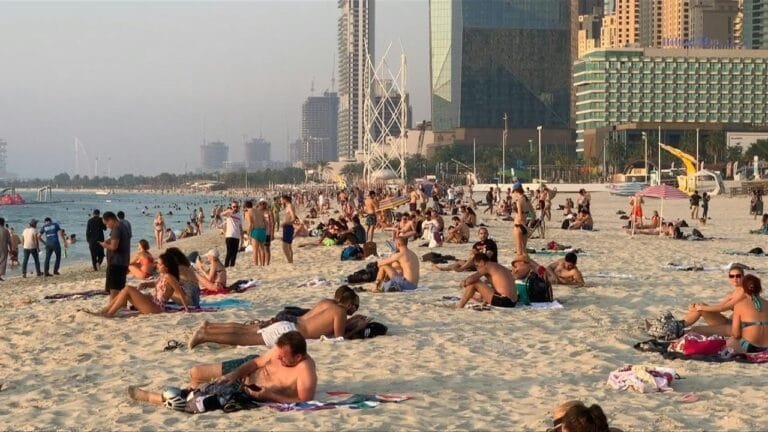
As the “orange” warnings issued by the Met Office continue, indicating a potential threat to life, media reports have revealed a surge in tourist travel from Britain to the United Arab Emirates.
Thousands of Britons are seeking a warmer escape from London’s freezing temperatures, with Dubai and Abu Dhabi proving popular destinations. They are eager to enjoy the sunshine and milder temperatures, fleeing the high cost of heating and the icy streets blanketing the UK.
Government measures and emergency support
To combat rising heating costs, the British government has activated a £25 “cold weather allowance” for hundreds of thousands of families, particularly pensioners and people with disabilities. The Department of Public Health has also warned of the risks to the most vulnerable groups, urging citizens to care for the elderly and those with dementia during these harsh conditions.