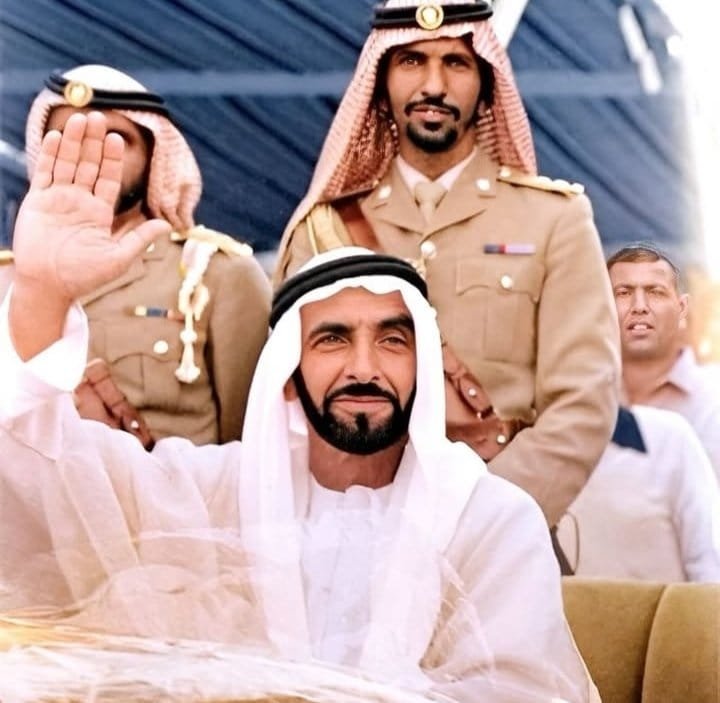
Abu Dhabi, UAE – As part of the celebration of UAE Union Day, the humanitarian legacy of His Highness Sheikh Zayed bin Sultan Al Nahyan, may God have mercy on him, the founder of the UAE,
stands out as one of the most important pillars of the country’s renaissance and its civilizational message.
His charitable work has transcended geographical and political boundaries,
making boundless giving a hallmark of the UAE’s name throughout the world.
As the UAE prepares to celebrate Union Day, it also honors the legacy
of His Highness Sheikh Zayed, may God rest his soul.
Which made humanitarian work a national identity and a message to the world – giving without limits.
It will continue as long as there is a person on earth who needs a hand extended with kindness.
Since the founding of the state, Sheikh Tayeb, may God have mercy on him,
was keen to make humanitarian work a part of the identity of the Emirates.
He emphasized that “true wealth is not in money,
but in men who serve their nation and humanity.”
Based on this principle, Emirati aid has transformed into an institutional approach.
Which is supervised by charitable organizations and associations
that operate according to a clear and sustainable vision.
A global human presence
He established a group of humanitarian institutions that carried his message,
most notably the Zayed Charitable and Humanitarian Foundation.
The Emirates Red Crescent Authority and the Khalifa bin Zayed Al Nahyan Foundation for Humanitarian Works
In addition to education, health and relief initiatives that have covered
more than 100 countries around the world.
These efforts contributed to the construction of schools and hospitals, and the digging of wells.
Supporting poor communities affected by wars and natural
disasters in Asia, Africa, Europe and Latin America.
Ethical policy
Emirati aid was not merely charitable initiatives, but during the era of Sheikh Zayed
it transformed into what can be described as the state’s “moral policy”.
The concept of Emirati soft power is linked to humanitarian giving.
Based on the principle of “extending a helping hand without regard to religion, race, or language”.
Thus, the UAE has become one of the largest international donors,
according to United Nations reports.
Advanced in the volume of aid compared to its national income,
in a unique model that combines development, compassion and humanitarian responsibility.
Continuation of the approach under the sons
The sons of Sheikh Zayed, may God rest his soul, continued this humanitarian approach with utmost sincerity.
Humanitarian initiatives have become a cornerstone of the UAE’s foreign policy.
The vision of His Highness Sheikh Mohammed bin Zayed Al Nahyan, President of the State,
is evident in supporting global efforts to combat poverty, epidemics and climate change.
This is done through institutions such as the Abu Dhabi Fund
for Development and the “Feeding a Billion Meals” initiative.
Which was launched by the state to help the poor in different continents.
The UAE has also become a leading country in providing aid during global disasters.
From the earthquakes in Türkiye and Morocco to the Gaza and Ukraine crises,
in a practical confirmation of the continuity of Zayed’s approach.
From human nationalism to globalism
In the same context, Sheikh Zayed, may God have mercy on him,
did not view humanity as a local or regional issue,
Rather, it is a universal concept that unites people under one banner: goodness.
Through his vision, the UAE moved from a humanitarian nationalism t
hat focused on its Arab and Islamic surroundings to a global humanitarianism
that serves humanity wherever it may be.
This transformation has made the name of the UAE
a symbol of tolerance, cooperation, and sustainable giving.
It established in the international consciousness the image of
a state that carries a message of peace and hope to all the peoples of the earth.