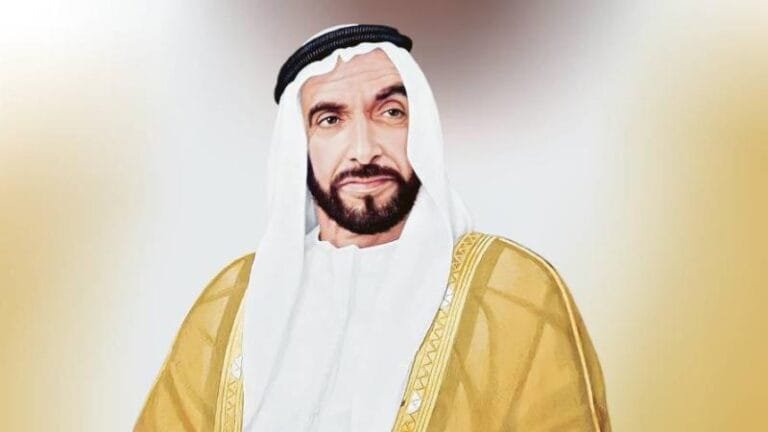
Abu Dhabi, UAE – The UAE is preparing to celebrate Union Day, in which the country recalls the legacy of the founding leader, His Highness Sheikh Zayed bin Sultan Al Nahyan, may God have mercy on him, who formulated a development vision that was ahead of its time.
I made oil a means to build the human being and the state, not an economic goal in itself.
This is the philosophy that guided the nation-building process since the establishment of the Union in 1971.
It still forms the intellectual foundation for the country’s economic and environmental policies to this day.
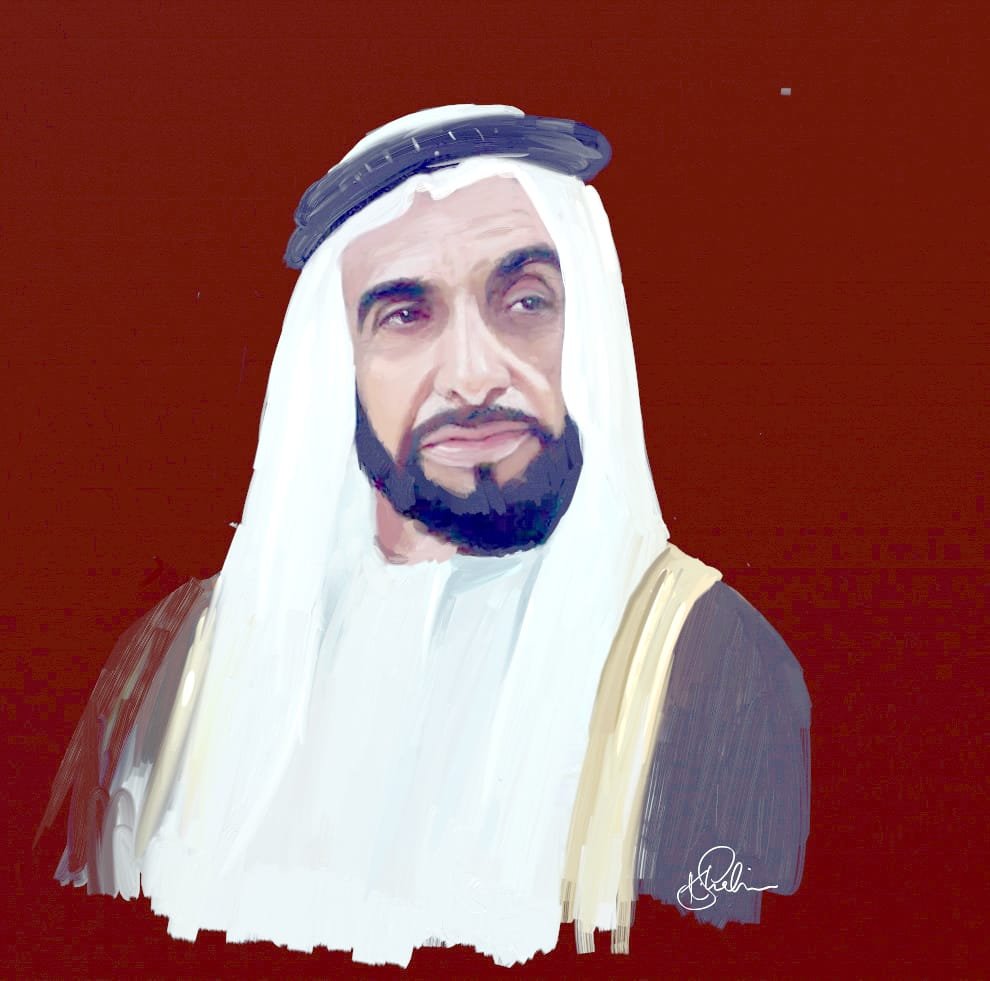
Oil is a source of development, not luxury.
When the first oil revenues flowed in during the 1960s,
Sheikh Zayed set out an ambitious plan to use them in building infrastructure and developing people.
Roads, ports, and airports were built.
Examples include Zayed Port in Abu Dhabi (1972) and Abu Dhabi International Airport (1982).
In addition to housing, school and hospital projects that included all the Emirates.
Zayed established the Abu Dhabi National Oil Company (ADNOC) in 1971
to be the state’s arm in managing oil wealth.
In an institutional manner that ensures the sustainability of returns
and the development of national competencies.
Under his leadership, investment was not limited to crude oil exports,
but also encouraged petrochemicals and manufacturing industries.
The UAE subsequently became one of the world’s leading energy producers.
Transforming the desert into a green oasis
In a barren environment that knew only sand, Sheikh Zayed led an unprecedented green revolution.
He launched massive projects to transform the desert into fertile land,
building the Al-Wahat Dam in Al-Ain and digging thousands of wells.
He introduced modern drip and sprinkler irrigation systems and planted millions of trees.
Statistics indicate that the number of palm trees in the UAE exceeded 130 million at the end of the 1990s.
Thanks to his agricultural initiatives, he also launched Al Ain Agricultural City
as a center for trials of drought-resistant crops.
He encouraged the cultivation of wheat and fodder to reduce dependence on imports.
His environmental vision was based on the principle that “agriculture is civilization,
and man without fertile land has no future.”
He transformed the UAE from a barren desert into a global green oasis that hosts parks
and nature reserves such as the “Al Wathba Reserve” and the “Arabian Oryx Park”.

The post-oil economy: A proactive vision for diversification
Sheikh Zayed foresaw early on that oil was a depleting resource,
so he established an economic vision based on diversification and sustainability.
He worked to support the trade, services, tourism, and clean energy sectors.
The first step was the establishment of the Abu Dhabi Fund for Development (1971)
to support development projects both domestically and internationally.
He encouraged investment in civil aviation by establishing “Emirates Airlines”
and “Etihad Airways”,
He supported free zone projects such as Jebel Ali,
which has become one of the most important trade centers in the Middle East.
In the field of clean energy, his foundational ideas were behind the major projects later adopted by the UAE,
such as Masdar City for renewable energy.
The UAE’s peaceful nuclear program in Barakah made it the first Arab country to produce electricity using nuclear power.
The UAE before oil and after Zayed
Before the discovery of oil, the Emirates relied on pearl diving and small-scale trade.
But Zayed led a comprehensive civilizational transformation that,
within a few decades, made the country one of the most globally competitive economies.
Today, the UAE, under the leadership of its people, continues its approach to
a “post-oil economy” based on knowledge, innovation and sustainability.
Sheikh Zayed realized early on that a renaissance is not built on a temporary resource,
but on a person who is rooted in his land and open to the world.
Therefore, his legacy in sustainable development will remain
an eternal roadmap for a nation that made oil a means and man the end.