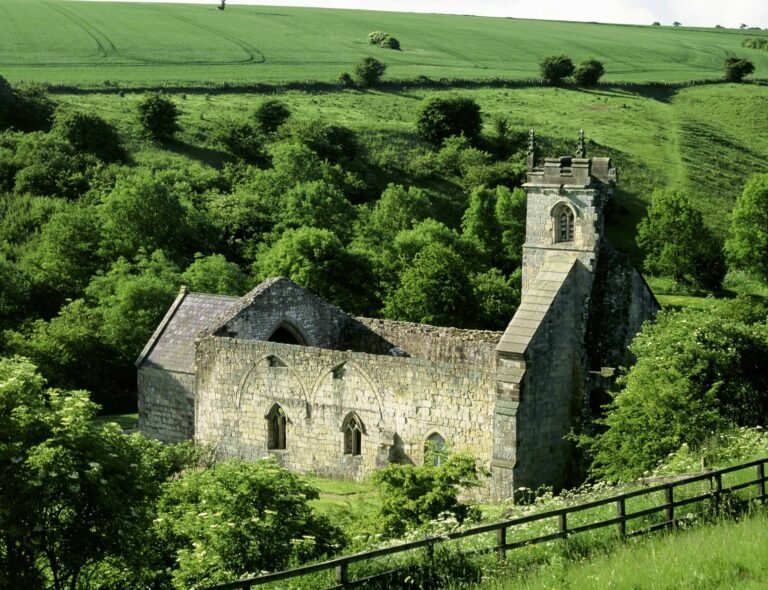
Central Asia – The village of “Warram Percy” has returned to the forefront of global research interest after recent archaeological and analytical studies revealed features of an integrated economic system characterized by a remarkable degree of sustainability during the Middle Ages. These discoveries come at a time when the world seeks to understand the roots of sustainability, as the village demonstrated an exceptional ability to manage resources centuries before modern environmental economic concepts were formulated. Accordingly, the Warram Percy sustainable economy represents a unique model proving that ancient communities possessed an innate awareness of maintaining ecological balance.
Mixed Farming and Resource Recycling as Tools for Economic Resilience
Detailed excavation results showed that the village residents succeeded in establishing a lifestyle primarily based on a balance between production and consumption. Obviously, their reliance on “mixed farming” and recycling available natural resources contributed to minimizing waste and maximizing the efficiency of limited land and water resources. As a result, this community was able to withstand climatic and economic challenges thanks to simple yet effective innovations in managing food stocks and available renewable energy of that era.
Local Exchange Networks and Inspiring Solutions for Modern Problems
Archaeological evidence also revealed simple local trade exchange networks that helped stimulate economic activity with neighboring settlements without sliding into patterns of overconsumption. Certainly, the importance of these discoveries extends to the present, as researchers believe they can be read within the context of contemporary discussions on the “Green Economy.” Accordingly, the Warram Percy sustainable economy remains a source of inspiration, offering historical solutions to current environmental depletion problems, confirming that returning to roots may be the key to a more sustainable future.