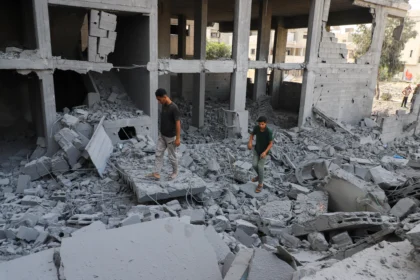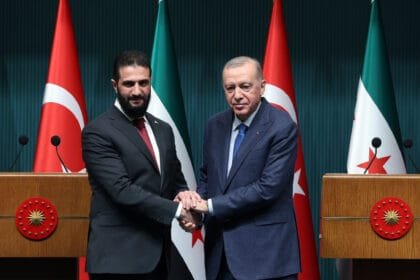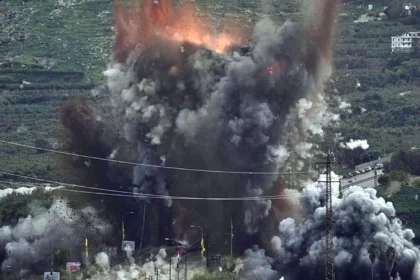
Seoul, South Korea – Financial markets in South Korea and across Asia hit record highs in trading on Wednesday, April 8, 2026. This surge was fueled by cautious optimism following the agreement reached between the United States and Iran for a two-week ceasefire. In a striking scene inside the foreign exchange trading room at Bank Hana’s headquarters in Seoul, traders were glued to screens displaying a speech by US President Donald Trump. Furthermore, the US dollar experienced a significant decline, losing its appeal as a “safe haven” immediately after the ceasefire announcement.
Historic leap in Asian indices
South Korea’s Kospi index led the gainers, surging 7.1% to close at 5,884.55 points. This surge was fueled by hopes of a resumption of vital energy supplies through the Strait of Hormuz. Japan’s Nikkei 225 was no less enthusiastic, climbing 2,878.86 points, or 5.39%, to close at 56,308.42. The gains extended to other markets across the region, with Hong Kong’s Hang Seng index rising 3.1%, the Shanghai Composite adding 2.5%, and Australia’s S&P/AEX 200 jumping 2.6%.
Energy and currency price collapse
In contrast, energy markets experienced a sharp decline as concerns about global supply disruptions subsided. West Texas Intermediate crude oil fell by $18.23 to $94.72 per barrel. Brent crude also declined by $16.43 to close at $92.84. The impact was most pronounced in the natural gas market, where futures contracts fell by 20%. In the currency markets, the US dollar weakened against the Japanese yen, reaching 158.10 yen, compared to 159.52 yen earlier. Meanwhile, the euro rose to $1.1700. This movement reflects a decrease in demand for the dollar as a hedge against geopolitical risks.
Cautious optimism
Despite these positive figures, analysts cautioned against excessive celebration. Tim Waterer, chief market analyst at KCM Trade, said, “The overall mood is one of cautious optimism; the truce is only for two weeks, and markets will be closely watching whether the Iranian military adheres to its promise to reopen the Strait of Hormuz.” Takashi Hiroki, chief strategist at Monex, noted that volatility remains possible, stating, “There is reason for optimism, but it is too early to predict ultimate stability, especially given the unpredictable policies of the Trump administration.” Markets are now awaiting the first round of direct negotiations. This round will determine whether this fragile truce will pave the way for lasting peace or simply be a brief respite.