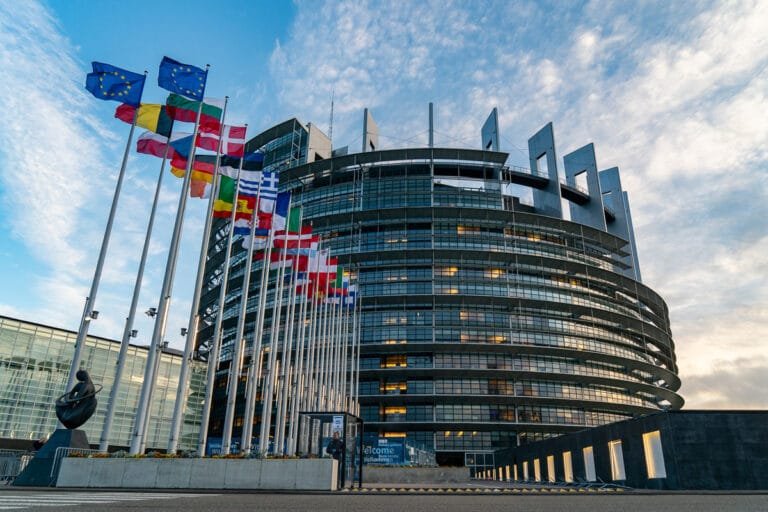
Strasbourg, France – The European Parliament has approved a strategic decision to end all Russian gas imports to EU countries by the end of 2027;
This move aims to reduce Brussels’ dependence on Russian energy following the outbreak of war in Ukraine.
This is despite objections from some member states, most notably Hungary and Slovakia.
Voting results and legislative process
Regarding the details of the session, the decision was made during a plenary session held in Strasbourg.
500 MPs voted in favor of it, while 120 MPs opposed it.
Although Parliament has adopted this plan, its implementation is still contingent upon official ratification.
This is from the Council of Ministers of the European Union,
and is expected to take place early next year.
The ethical and financial motivations of the law
For her part, the rapporteur of the bill, Ines Faider, considered the vote to be a “historic achievement”.
She stressed that continuing to import gas contradicts the Union’s political positions.
Furthermore, she pointed out that EU countries have spent more
than 216 billion euros on Russian fuel since the beginning of the war.
This constitutes an indirect source of funding for the war,
as the continent continues to pay around 40 million euros a day to Moscow.
Overcoming opposition and legal challenges
In order to ensure its passage, the law was designed to be adopted by an enhanced majority,
allowing for the overriding of objections from Hungary and Slovakia,
which prefer to maintain the current energy relations.
In this context, Hungarian Prime Minister Viktor Orban announced
his intention to appeal the decision in court.
He argued that the plan directly violated his country’s national interests.
Implementation mechanism and timeline for the ban
From an implementation standpoint, the decision stipulates a gradual ban
on the purchase of Russian gas, leading to full implementation by November 1, 2027.
The ban also includes complex long-term contracts and involves imposing strict financial penalties.
This applies to companies that may try to circumvent these measures.
The reality of current European dependence
Finally, it should be noted that the resolution does not include
a complete ban on Russian oil or nuclear fuel at present.
However, Europe has succeeded in reducing its dependence
on Russian gas from 45% before the war to about 12% by last October.
This is despite the fact that some countries, such as France and Belgium,
continue to receive part of the supplies so far.