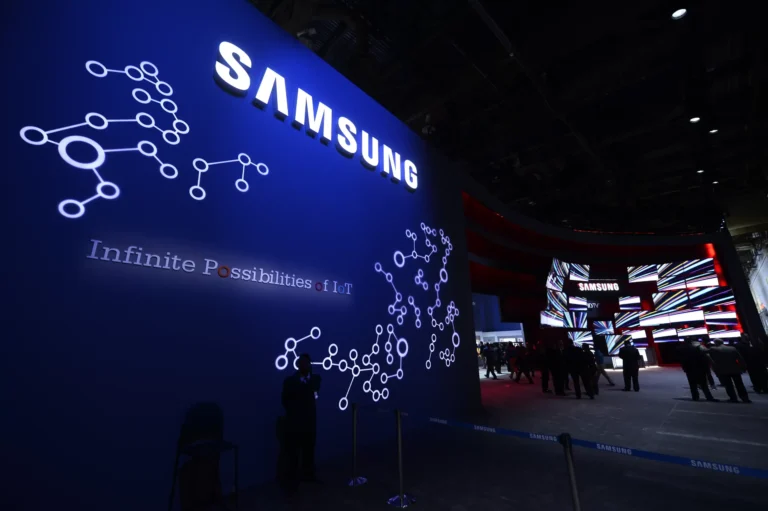
Samsung Electronics is preparing to announce its earnings report for the second quarter of 2026 on July 7, amid strong expectations of breaking historic records. Market estimates suggest that quarterly operating profit may exceed the 90 trillion won mark, reflecting a massive surge in light of the global technology sector’s recovery.
The “Super-Cycle” of Semiconductors Drives Growth
These exceptional results are primarily attributed to the continuation of the “Super-Cycle” of semiconductors, fueled by growing global demand for artificial intelligence infrastructure. Samsung has successfully overcome previous concerns regarding slowing demand thanks to the expansion of the AI market to include data centers and physical artificial intelligence, keeping semiconductor prices on an upward trend expected to continue until at least next year.
According to Yonhap Infomax analyses, the average consolidated operating profit forecast is expected to rise by a staggering 1699.8% compared to the same period last year, while revenue is projected to jump by 136% to approximately 176 trillion won. Excluding provisions for employee performance bonuses (estimated at 20 trillion won), profits may approach the 100 trillion won threshold, an unprecedented achievement in the history of global technology companies.
Strength of the Device Solutions (DS) Sector vs. DX Pressures
The Device Solutions (DS) division continues to be the primary engine for this strong financial performance, benefiting from Samsung’s status as the world’s largest memory production capacity holder. The company has also reinforced its technological leadership through mass production of the sixth generation of High Bandwidth Memory (HBM4), securing long-term supply agreements with major technology firms.
On the other hand, the Device eXperience (DX) division, responsible for mobile phones and home appliances, faces ongoing challenges including rising component costs and fierce competition, leading to expectations of relatively weak performance for this sector and a tightening of operating profit margins for its units.
These results confirm Samsung’s ability to adapt to global market fluctuations, solidifying its position as one of the most influential economic entities in the technology sector due to its long-term investment and innovation strategies.