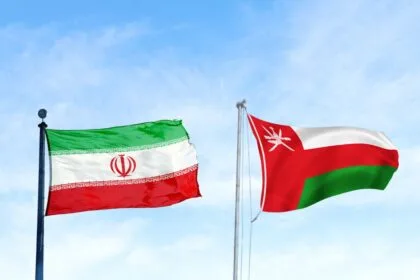

Tehran, Iran – Press reports, citing informed sources, indicate that Tehran and Muscat are rapidly approaching a strategic agreement to reopen the vital Strait of Hormuz. According to The New York Times, which quoted Iranian and American officials, the agreement under preparation stipulates the division of incoming and outgoing ship traffic. In addition, it stipulates that the costs and revenues from maritime services will be shared equally between Iran and Oman.
The agreement details that ships bound for the Arabian Gulf will pass through a corridor controlled by Iran and close to its coast. Meanwhile, ships leaving the Gulf will use a shipping lane near Omani waters. This new arrangement aims to reorganize the movement of commercial vessels and oil tankers. It comes after a prolonged period of disruption to maritime traffic.
Details of returns and service fees
Iranian officials explained to the newspaper that while no official transit fees would be imposed, the agreement would include a “service fee” to compensate for the environmental impact of heavy shipping operations. It would also cover providing necessary security for cargo ships and oil tankers. Furthermore, the necessary workforce to operate the waterways would be secured. Moreover, two Iranian officials confirmed that the Iranian and Omani sides would share these revenues equally.
On the other hand, Washington was quick to offer a different reading. An American official familiar with the negotiations described the Iranian account as “inaccurate.” The American official stressed that establishing any temporary road through the Strait never requires Tehran’s approval or prior permission. He also stressed that he would not impose any kind of fees on international ship traffic.
Trump’s vision and the Pentagon’s concerns
If this agreement is implemented in its final form, it could significantly contribute to resolving one of the most pressing political crises facing the administration of US President Donald Trump. That crisis is the resumption of maritime navigation and securing global energy flows. For his part, the US president expressed considerable optimism regarding the crisis. He asserted in press statements that matters would become clear very soon. He added, “The first phase is opening the straits, and the second phase will be nuclear disarmament.”
In contrast to the White House’s optimism, The New York Times noted a sense of skepticism and reservation among senior Pentagon officials. These officials expressed concerns that this mechanism could lead to a kind of capitulation to Iranian policies.
These concerns are heightened by the large number of mines that still obstruct shipping lanes. Therefore, coordinating with Iran is essential for safe passage of vessels.
Official Iranian rejection and the international stance
On the official Iranian level, a divergence of positions emerged. Kazem Gharibabadi, the Iranian Deputy Foreign Minister, stated that the government rejected an initial Omani plan that included ceding fifty percent of Iranian maritime shipping lanes. He explained that Tehran had presented an alternative plan. This plan stipulates that all entry routes and a portion of the exit routes must pass through Iranian territorial waters. This is intended to ensure tighter security control.
In the same vein, the International Maritime Organization (IMO) announced that it had never participated in any talks concerning the Muscat Plan. It emphasized that any modification to the shipping lanes or traffic regime must be formally submitted to member states for approval. Meanwhile, Reuters confirmed that the previously established international shipping lanes are now unusable due to mines.