- The fluctuating “Trumpian vision”: between admiration and distrust
- Alliance of Kurdish parties: The force of 6,000 fighters
- Field commanders: “We are not pawns, but we seize opportunities.”
- Analysis: Will the Kurds be bitten twice by the same snake of “promises”?
- Future scenarios: from blockade to no-fly zone
Voice of the Emirates – As US forces tighten their grip on Iranian seaports in a blockade the White House has described as potentially continuing “indefinitely,” and with the likelihood of renewed airstrikes against Tehran escalating, a fundamental question arises in political research circles: Is it time for President Donald Trump to reactivate the “Kurdish card” as an internal front to destabilize the regime?
Observers believe that the failure of the recent Islamabad negotiations has left Washington with the option of diversifying its pressure tactics. Therefore, Washington has moved beyond the economic and maritime blockade to activating opposition groups based on ethnicity, primarily the Kurdish forces. These Kurdish forces possess a well-organized military and political structure and have the capacity to disrupt the internal dynamics of the Iranian conflict.
The fluctuating “Trumpian vision”: between admiration and distrust
The Trump administration’s second relationship with the Iranian Kurds (Rojlat) was ambiguous from the outset. In early March 2026, during the initial phase of the military campaign against Iran, Trump described the idea of enlisting the Kurds as “fantastic.” However, he quickly backtracked to reporters, saying, “They’re ready to go in, but I told them I don’t want them going in right now.” This vacillation, according to analysts, stemmed from past operational experiences marked by apprehension. During the December 2025 protests, reports confirmed that Washington had sent weapons to the demonstrators “through a Kurdish intermediary.” Trump later claimed that the Kurds had kept those weapons for themselves instead of distributing them. This “crisis of trust” made Washington hesitant to entrust them with a leading role. It feared they might become an independent force serving nationalist agendas that transcended immediate American interests.
Alliance of Kurdish parties: The force of 6,000 fighters
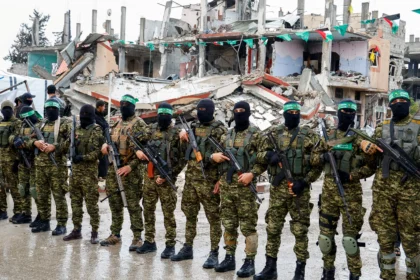
Despite American ambiguity, the Kurds did not remain idle. In February 2026, five major Iranian Kurdish parties announced the formation of a broad alliance to coordinate policy toward Iran. The alliance includes the Kurdistan Democratic Party of Iran (KDPI), the Kurdistan Freedom Party (KVK), the Kurdistan Free Life Party (PJAK), the Khabat Organization, and the Komala Movement. This alliance possesses a fighting force (Peshmerga) estimated at 6,000 fighters, most of whom are stationed in the rugged mountainous regions along the Iraqi-Iranian border.
In a statement issued on April 10, the alliance held Tehran responsible for the war due to its nuclear ambitions, asserting that “the regime is beyond reform.” The statement also emphasized that radical democratic change is the only path to stability.
Field commanders: “We are not pawns, but we seize opportunities.”
In an interview with “Sawt Al Emarat,” Arif Bawe Jani, head of the Kurdistan Freedom Party, clarified the Kurdish equation: “The Kurds are not pawns in the hands of any state, but achieving the interests of our people opens the door to cooperation. The Peshmerga operate according to a Kurdish national decision, and if a full-scale war breaks out, we must seize the opportunities available in the Middle East. We are the only force equipped and prepared to deal with any power vacuum in Tehran to protect Kurdistan’s lands and resources.” He emphasized that the Kurdish Peshmerga in Iranian Kurdistan operate according to a Kurdish decision and in accordance with the necessities of Kurdish national interest, and are not a “card” in the hands of America, Israel, or any other party.
He stated that in the event of another war between Israel and the United States against Iran, the Kurdish people and the Peshmerga must seize the opportunities available in the Middle East to serve their interests. He added that there is no objection to negotiating or reaching an agreement with the international coalition if it serves the interests of the Kurdish people. Jani continued, saying that in the event of the fall of the Iranian regime, the Peshmerga’s role in any power vacuum in Tehran would be to protect Kurdish territory, safeguard the security and resources of the people, and prevent chaos. The Kurdish politician also asserted that the Peshmerga is the only well-equipped force within Iran capable of handling any future political changes.
For her part, Sara Nawa, a member of the Kurdistan Free Life Party (PJAK), told Voice of the Emirates that over the past 47 years of the Iranian regime’s rule, the Kurdish people have engaged in various struggles and have always been at the forefront of resistance among the peoples of Iran. Nawa said, “The Kurdish people, with their awareness and understanding of the importance of struggle at the right time and how to conduct it, have sought to seize every opportunity to bring about change in the despotic system of power. The primary goal of these struggles has been to establish a democratic Iran and resolve the Kurdish question within a democratic framework. The methods employed in these struggles have also remained distinctly democratic.”
She continued, “The political parties in Rojlat, especially our movement, the Kurdistan Free Life Party (PJAK), consider themselves organizations rooted in the people. Based on the interests and aspirations of our people, we continue our efforts and struggle. We firmly believe that any force working in line with the interests and aspirations of our people in Rojlat and the peoples of Iran will find us allied. We will strive to contribute effectively and participate in this transformation process.” She emphasized that even in the event of war, the party remains committed to working towards the transformation of the authoritarian regime in Iran while minimizing harm and avoiding imposing excessive costs on the Kurdish people.
Analysis: Will the Kurds be bitten twice by the same snake of “promises”?
Political analyst Ahmed Sheikho told Voice of Emirates that the contradictions in Trump’s statements reflect Washington’s lack of a clear vision for the “day after” the regime’s fall. Sheikho points out that the Kurds have a “crisis of confidence” in the American side, especially after the experience in northern Syria and Washington’s occasional preference for other parties over its Kurdish allies. Sheikho adds, “The Kurds will not be soldiers in Trump’s futile war. They have a ‘third way’ approach based on democracy and pluralism. Trump wants to drag everyone into his war, but the Kurds believe their interest lies in strengthening their internal front. However, if a complete collapse occurs, it is natural for them to take the initiative to manage themselves, which could present Iran with a new and complex geopolitical reality.”
Future scenarios: from blockade to no-fly zone
With the naval blockade in place, observers believe the next step could be a no-fly zone over western Iran. This would provide cover for the armed opposition’s movements.
Scenario One: Using the Kurds as a “distraction” force to divert the Revolutionary Guard’s focus from the naval and nuclear fronts.
The second scenario: Washington temporarily ignores the Kurdish card to avoid angering regional powers, and focuses solely on economic strangulation.
For Trump, the “Kurdish card” remains a risky strategic option; it offers the quickest impact on Iranian domestic affairs, but it is also the most complex in terms of alliance calculations. The Kurds, for their part, have learned from history that international promises are fickle. Therefore, they are preparing themselves to await the moment of collapse, not as Trump’s soldiers, but as guardians of their long-held dream of sovereignty and freedom amidst the region’s turmoil.