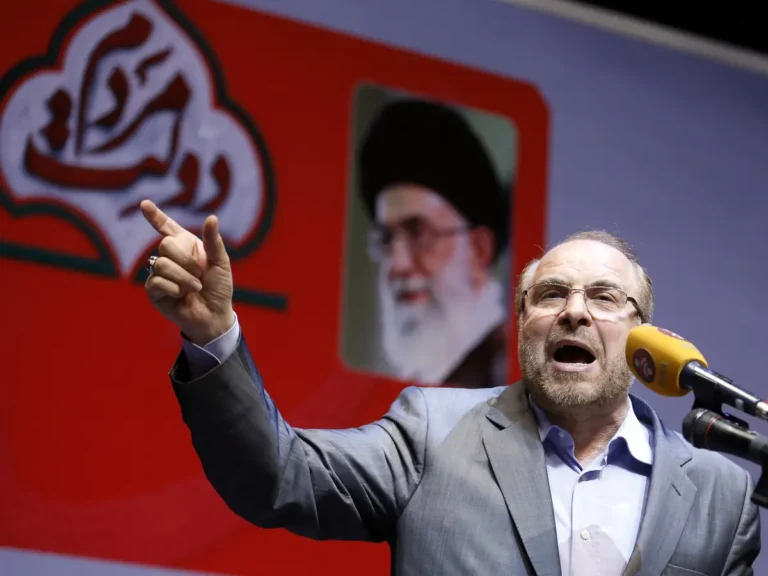
Tehran, Iran – Iranian Parliament Speaker and head of its negotiating delegation, Mohammad Baqer Qalibaf, revealed the reasons for the failure of the latest round of negotiations in the Pakistani capital, stressing that the American side did not succeed in allaying Tehran’s fears or providing real guarantees to rebuild the lost bridges between the two countries.
Crisis of confidence and Iranian initiatives
In statements published on the “X” platform, Qalibaf explained that he entered the talks with good intentions and political will, but that “past war experiences” cast a shadow over the negotiations, making it impossible to trust American promises.
He noted that the Iranian delegation presented forward-looking ideas for a solution through the “Platform 168” initiative, but Washington failed to seize this opportunity to gain the Iranian delegation’s trust, leading to the conclusion of the round without a concrete agreement.
Qalibaf also expressed his gratitude to Pakistan, describing it as a “friendly and brotherly” nation that had made significant efforts to facilitate this complex process.
“The Sword’s Discourse” and the Diplomacy of War
In parallel with Qalibaf’s diplomatic statements, the positions of the Deputy Speaker of Parliament, Hamed Reza Haji Babaei, added an offensive character to the Iranian position, as he stated that his country does not have a “negotiating team” in the traditional sense, but rather sent fighters who are waging a “soft war” in the diplomatic field.
Haji Babaei asserted that the primary objective of their presence in Pakistan was “to compel the United States to concede at the United Nations,” emphasizing that any outcome short of this would be unacceptable.
He added sharply, “Our negotiations are our war,” indicating that messages emanating from the Iranian street confirm that the Islamic Republic’s rhetoric is “a rhetoric of the sword.”
An existential struggle until the end
The deputy speaker of parliament concluded his remarks by asserting that the current confrontation between Iran on one side, and the United States and Israel on the other, is a “fundamental” and existential war. He emphasized that this battle, whether military or diplomatic, will continue unabated “until we make America kneel,” reflecting the deep divide and escalating defiance within Tehran’s leadership circles despite ongoing international efforts to de-escalate tensions.