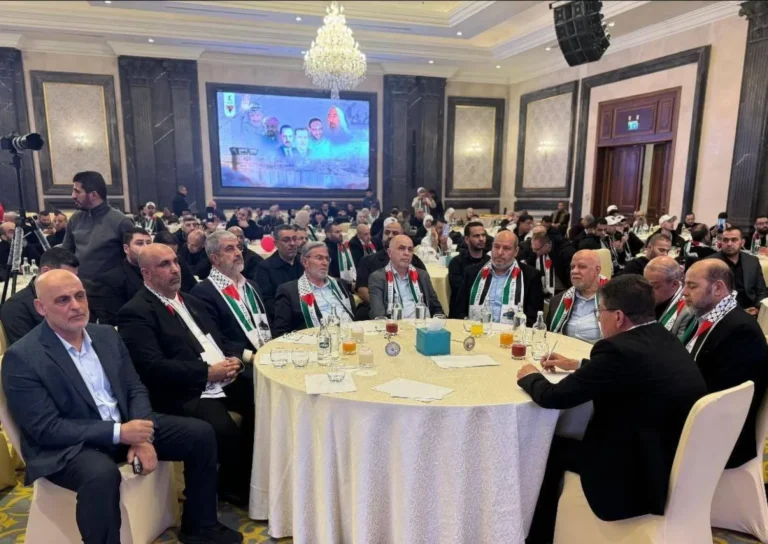
Cairo, Egypt – A Hamas negotiating delegation, headed by Khalil al-Hayya, arrived in the Egyptian capital, Cairo, on a critical diplomatic mission aimed at halting the erosion of the ceasefire agreement. Two informed sources within the movement stated that the delegation will hold intensive meetings today, Sunday, with officials from the Egyptian General Intelligence Directorate. These meetings will address the escalating Israeli violations of the ceasefire agreement in the Gaza Strip. The delegation will also discuss the stalled transition mechanisms between the agreement’s phases.
A race against time to stop the collapse
Since the ceasefire came into effect on October 10, the devastated Gaza Strip continues to suffer from relentless violence, despite two years having passed since the outbreak of war. In a statement to AFP, a Hamas official (who requested anonymity) confirmed that the delegation would discuss “a complete cessation of hostilities and the implementation of the outstanding obligations of the first phase.” The movement’s demands in this round of talks revolve around three main points:
Military field: The need to dismantle all military points and sites established by the Israeli occupation army west of the “yellow line”.
The humanitarian reality: Pressuring for the sustainable entry of 600 aid trucks per day, and opening crossings to increase the movement of goods and travelers.
Civil Administration: Enabling the “National Committee for the Management of Gaza,” composed of 15 Palestinian experts, to immediately assume its duties in managing the affairs of the sector.
Coordination with the “Peace Council” and the factions
In parallel with the Egyptian meetings, a well-informed source revealed that the Hamas delegation will hold extensive consultations with leaders of Palestinian factions present in Cairo to unify the national vision. Hamas leader Ismail Haniyeh will also hold an important meeting with the UN Special Coordinator for the Middle East Peace Process, Nikolay Mladenov. Discussions will focus on the obstacles to the agreement, which is under the direct supervision of the UN Special Coordinator for the Middle East Peace Process, chaired by US President Donald Trump.
The second phase’s challenge: disarmament
These moves come amid international complexities, as Washington announced last January that the agreement had moved to its “second phase” based on the American peace plan. This phase stipulates terms that Hamas categorically rejects, most notably the disarmament of the movement in exchange for the gradual withdrawal of Israeli forces and the deployment of an international stabilization force. The movement emphasizes to the mediators that the priority now is completing the withdrawals of the first phase and halting provocations on the ground. It considers any talk of disarmament under Israeli conditions an obstacle to any genuine stability. This places the mediators in Egypt and the members of the “Peace Council” before the challenge of reconciling Israeli security demands with Palestinian demands on the ground and regarding sovereignty.