Islamabad, Pakistan – In a significant diplomatic development reflecting the high hopes pinned on ending the regional crisis, the Pakistani capital, Islamabad, today welcomed a high-level US delegation headed by Vice President J.D. Vance. The visit aims to forge lasting solutions to the recent military confrontation in the region.
Official reception with extensive military and political representation
The Pakistani Foreign Ministry confirmed in an official statement the arrival of the US delegation, which includes key figures in Washington’s foreign policy. The delegation is headed by Special Envoy to the Middle East Steve Wittkopf and Advisor Jared Kushner. They were received upon arrival by senior Pakistani officials, including Deputy Prime Minister and Foreign Minister Ishaq Dar, Chief of Army Staff Field Marshal Syed Asim Munir, and Interior Minister Mohsin Raza Naqvi.
Praise for the American commitment and a call for constructive dialogue
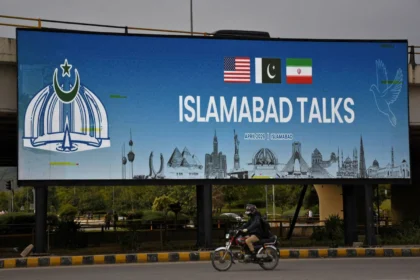
During the welcoming ceremony, Ishaq Dar commended the United States’ role and Washington’s commitment to achieving “lasting regional and global peace and stability.” Dar expressed optimism that the roundtable in Islamabad would witness constructive engagement among the parties involved. He also emphasized that Pakistan would continue to play its role as facilitator of this historic dialogue. The Deputy Prime Minister reiterated his country’s sincere desire to reach a “permanent and sustainable solution to the conflict.” This comes as a departure from the rhetoric of military escalation that has severely damaged the international economy and security since the conflict erupted last February.
Islamabad: The Center of Diplomatic Gravity
These talks are taking place under intensive Pakistani auspices, as Islamabad seeks to solidify its position as a credible international mediator capable of bringing adversaries together at a critical juncture.
While the world awaits the outcome of this direct communication between Washington and Tehran, hopes remain high that diplomacy will succeed in establishing a temporary ceasefire. There is also widespread hope that this will evolve into a comprehensive agreement guaranteeing the security of vital waterways, most notably the Strait of Hormuz. These efforts are expected to put an end to the escalating tensions on various battlefronts. This step represents a true test of the two sides’ ability to overcome decades of hostility and signals the possibility of moving towards a new phase of de-escalation.