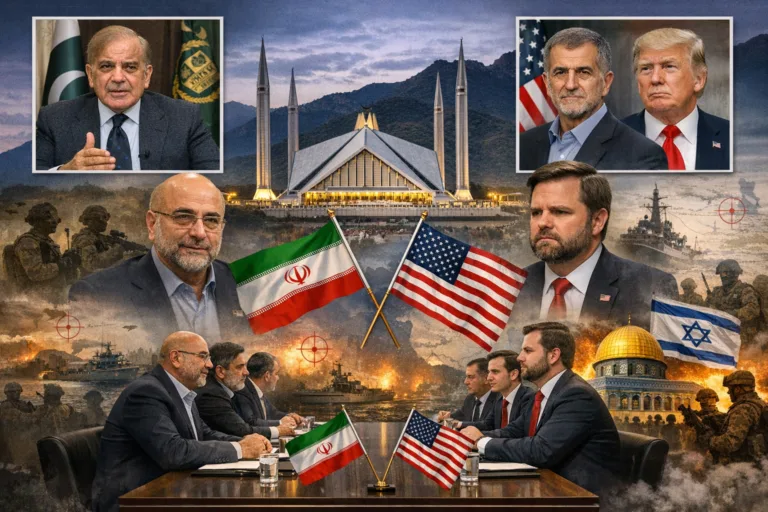
Washington, DC – The United States intends to raise the issue of the release of its citizens detained in Iran as a key condition in the historic negotiations expected in Islamabad on Saturday, which aim to forge a comprehensive agreement to end the regional war. According to a report in The Washington Post, the US administration is placing this humanitarian issue on the table as part of efforts to build trust between the two countries.
Ambiguity surrounds the “timing” of the pressure.
Despite the clear American stance, informed sources told the newspaper that there is uncertainty about the strength of the pressure that officials in President Donald Trump’s administration will exert in the opening sessions.
There is talk behind the scenes about the possibility of formally postponing the request if the negotiations show signs of stumbling on more pressing security issues, especially since the current ceasefire is under immense pressure and threatened with collapse. It is believed that at least six Americans are being held in Iranian prisons. Washington believes that Tehran is holding them to use them as bargaining chips and leverage in any future political or financial settlements.
Evin Prison: A cell at the heart of the conflict
Among the most prominent names whose release Washington is demanding are Kamran Hekmati (61) and Reza Valizadeh (49), both detained in Tehran’s notorious Evin Prison. This complex, which houses thousands of political prisoners, was severely damaged in an Israeli airstrike last year during the 12-day war, raising serious concerns about the safety of the foreign detainees held there. Lawyers and human rights advocates have confirmed that contact with these prisoners has become virtually impossible due to internet blackouts and heightened security measures within Iranian prisons since the recent conflict. This has further complicated legal efforts to monitor their cases.
The classification of “hostages” and the administration’s stance
For its part, the Trump administration officially designated the two men as “arbitrarily detained,” a legal term meaning the U.S. government considers them hostages held for purely political purposes.
The State Department issued a strongly worded statement condemning Tehran’s “long and shameful history of unjustly detaining foreign nationals,” calling for the immediate and unconditional release of all Americans. While the details of the talks in the Pakistani capital remain shrouded in secrecy, the White House has maintained a cautious silence. Spokeswoman Anna Kelly told the newspaper in an email, “These are ongoing discussions, and the United States will not negotiate through the media.”
Meanwhile, Iran’s mission to the United Nations has not issued any comment. This suggests that the issue of the prisoners may be the “trump card” or the “major sticking point” in the negotiations that began today in Islamabad.