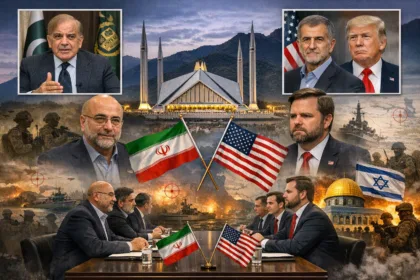
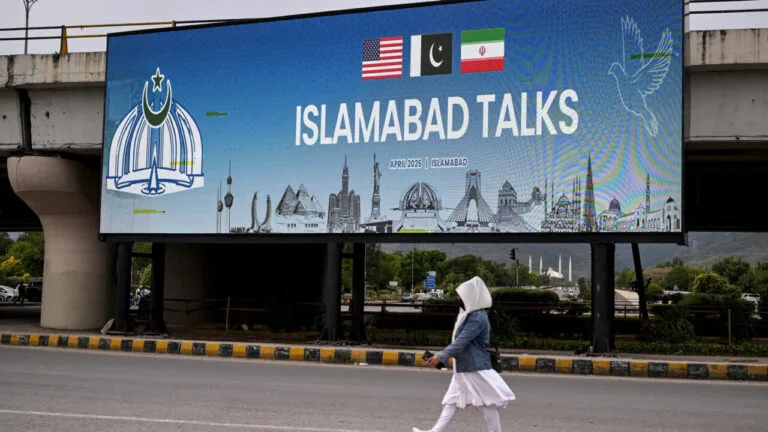
Washington, DC – Behind the scenes of the Islamabad negotiations between Washington and Tehran on Saturday, conflicting reports emerged regarding the issue of frozen Iranian assets. This issue is considered a cornerstone of any potential agreement to end the war and secure international navigation.
A firm American denial
A senior US official denied media reports today that the Trump administration had agreed to release frozen Iranian funds. Speaking to CBS News, the official confirmed that “the United States has not agreed to release any frozen Iranian assets to date.” He also emphasized that negotiations are still in their early and sensitive stages.
An optimistic Iranian novel
In contrast, a high-ranking Iranian source offered a completely different account, revealing to Reuters that the United States had given an initial “green light” for the release of frozen assets in Qatar and other foreign banks. The source considered this move, if confirmed, to be tangible proof of Washington’s “seriousness” in reaching a comprehensive settlement. The Iranian source, who requested anonymity, explained that the issue of the assets is “organically linked to guaranteeing safe and unconditional passage through the Strait of Hormuz.” It is also the most prominent American demand dominating the discussions in the Pakistani capital.
The “dollar shortage” weapon and the history of sanctions
Iranian assets held abroad are estimated at over $100 billion, distributed across global banks in countries such as South Korea, Japan, China, Germany, India, and Turkey. These funds represent the lifeblood of the Iranian economy. The sanctions reimposed by Trump in 2018 following the withdrawal from the nuclear agreement deprived Tehran of its foreign reserves. Consequently, this led to the collapse of the rial and the emergence of severe economic hardship. Last February, US Treasury Secretary Scott Bisnett explicitly acknowledged that Washington deliberately created a “severe dollar shortage” within Iran as a tool of political and economic pressure. This also contributed to fueling internal protests due to exorbitant prices and the inability of companies to settle their international payments in euros and yen.
Historical precedents and the clash of wills
This is not the first time assets have been used as bargaining chips. In 2014, Iran was granted access to $4.2 billion following an interim agreement, and in 2015, it received over $100 billion in exchange for nuclear restrictions. However, the reimposition of sanctions under Trump completely froze the process. As the Islamabad talks commence, observers believe that the leaks and subsequent denials of the funds release may be part of a “psychological warfare” tactic or a negotiating strategy to raise the stakes. While Tehran seeks to break the financial siege to salvage its ailing economy, Washington insists that the “price of the dollars” is a full Iranian commitment to ending threats in the Strait of Hormuz. It also emphasizes the necessity of halting support for armed proxies in the region.