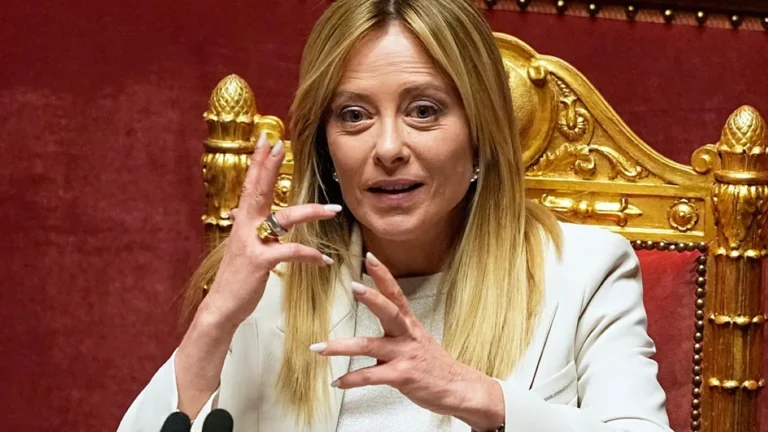
Rome, Italy – In a pivotal address to the Italian Chamber of Deputies lasting nearly an hour, Prime Minister Giorgia Meloni affirmed on Thursday that restoring freedom of navigation in the Strait of Hormuz is a vital interest not only for Rome, but for the entire European Union. Meloni pledged to work closely with international partners to achieve this goal. She also warned of the serious economic repercussions of Iranian control over global trade flows through this strategic waterway.
Warning against “transit fees” and the international coalition
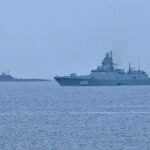
Meloni expressed grave concern over Iranian proposals to end the war, which include gaining the authority to impose additional fees on ships transiting the Strait. She stated, “If Iran succeeds in imposing these fees, it could lead to structural changes in trade flows and destabilize the global economy.” She noted that Italy is actively participating in the British-led coalition, which comprises more than 30 countries. She explained that its objective is to create the security conditions necessary for restoring energy supplies, which have been severely impacted because approximately one-fifth of the world’s oil and gas production passes through the Strait.
Disagreements within the government and a call for a ceasefire
Despite Meloni’s firm tone, a divergence of opinion emerged within the Italian government. Her deputy, Matteo Salvini, asserted that Rome would not send any ships to patrol the region without an explicit mandate from the United Nations. Meloni, for her part, condemned all violations of the recent ceasefire agreement (the two-week truce) between Washington and Tehran. She also called on Israel to end its military operations in Lebanon. Furthermore, she reiterated her opposition to the United States’ decision to wage war on Iran and denied accusations from the opposition that she was “coddling” US President Donald Trump.
Political stability despite the referendum defeat
This was Meloni’s first appearance before parliament since her crushing defeat in the referendum on judicial reforms two weeks ago. The referendum resulted in the resignation of several members of her government.
Despite the political pressure, Meloni ruled out any major cabinet reshuffle at present. She also affirmed her intention to remain in office until the end of her term, scheduled for the second half of next year. She concluded her address by describing the current situation as “a fragile horizon for peace that must be pursued resolutely.” She also warned that the world has come dangerously close to “the point of no return.”