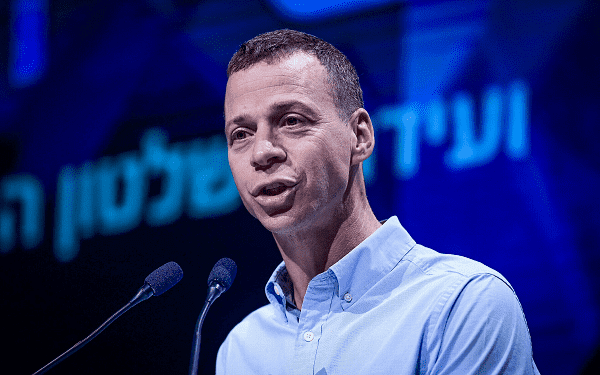
Tel Aviv, Israel – Prominent Israeli journalist Amit Segal made a startling revelation, publicly admitting that he was the first to report the rescue of an American pilot whose plane crashed over Iranian territory. This rare admission comes at a time when US President Donald Trump is waging an unprecedented attack on the media, threatening to imprison journalists who refuse to reveal their sources in matters related to national security.
Segal: “I will protect my sources no matter what.”
According to Newsweek, Segal confirmed that his story was based on accurate information from his own sources. He also emphasized his principled stance of not revealing the identities of those who provided him with the information. Segal stated unequivocally, “I will protect my sources at all costs,” a move that presents the global press with a real test in the face of increasing political and military pressures while covering the US-Israeli conflict with Iran. The roots of the crisis can be traced back to April 3, when a US F-15E Strike Eagle fighter jet crashed in southwestern Iran. While one of the two pilots was rescued immediately after the crash, the efforts to recover the second pilot involved two full days of intense military and diplomatic tension. During this period, news of the first rescue was leaked.
Trump’s threat: “Confess or go to jail”
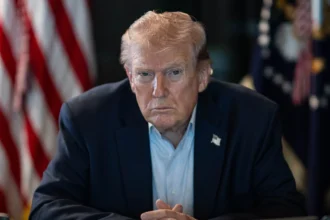
For his part, President Trump sharply escalated his criticism of the press, arguing that the leak of information about the rescue of the first pilot endangered the life of the second pilot and the ongoing mission. In a heated press conference at the White House, Trump said, “We kept it secret, and then somebody leaked something… We’re going to go to the news organization that published it and tell them: either hand over the source or go to jail.” Although several outlets, such as The New York Times and CBS News, published similar details, Trump’s anger focused on the principle of “leaks,” which he believes serve the enemy. In previous posts, Trump claimed that “the corrupt media wants us to lose the war.”
Blockade on streaming platforms
The escalation doesn’t stop at threats of imprisonment; it extends to the threat of revoking broadcasting licenses. Federal Communications Commission Chairman Brendan Carr indicated that stations broadcasting “fake news” could face difficulties renewing their licenses. Observers consider this an attempt to impose military censorship on media coverage of the war in Iran. In this context, these developments reveal a widening trust gap between the Trump administration and the press. The White House believes that “national security” takes precedence over press freedom. Journalists, on the other hand, insist on their right to inform the public about a war that could reshape the region. They also warn against the possibility of presidential threats becoming a reality that restricts freedom of speech in Western democracies.