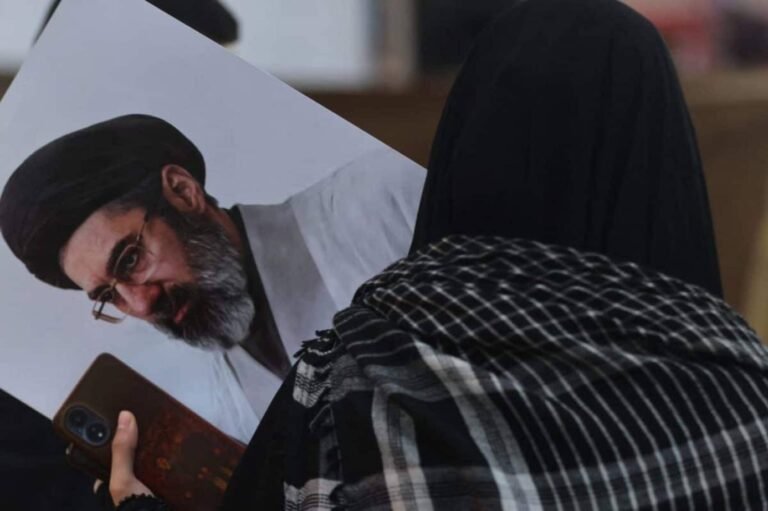
Washington, DC – A joint US-Israeli intelligence assessment has revealed dramatic developments within the Iranian power structure, indicating that the new Supreme Leader, Mojtaba Khamenei, has entered a state of complete incapacitation. The assessment also suggests he is effectively “incapacitated” from managing the country’s affairs amidst the critical military and political circumstances facing the Islamic Republic.
A “critical” medical condition and absence from decision-making
The Times of London, citing a high-level diplomatic cable believed to be based on accurate intelligence, reported that Mojtaba Khamenei, 56, is in critical condition.
The cable confirmed that the new Supreme Leader is currently receiving treatment at a specialized hospital in Qom. It further stated that he is “unable to participate in any decision-making process.” This has left the country in a leadership vacuum, masked by official statements.
This health crisis stems from the devastating airstrike that targeted the presidential compound last February. That attack killed his father, former Supreme Leader Ali Khamenei, and several other family members.
Although the Assembly of Experts announced Mojtaba’s selection as his father’s successor in early March, he has not appeared in public at any official event since then. His communication with the public has been limited to statements and written messages attributed to him.
Artificial intelligence: A weapon to cover up absence
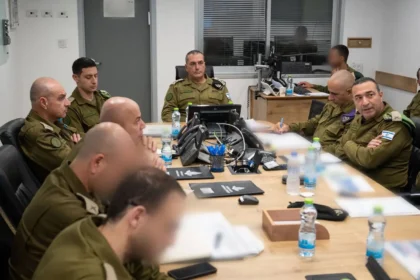
Adding to the speculation and doubts surrounding his fate was the Iranian state television’s resort to controversial technical methods to compensate for his absence. State media broadcast a video showing Mojtaba Khamenei inside a military operations room, examining a map that included the location of Israel’s Dimona nuclear reactor.
However, technical experts confirmed that the video was “entirely artificially created,” in an attempt by the regime to portray the new Supreme Leader as a dominant figure overseeing military operations against Israel.
This resort to digital manipulation has reinforced the Western intelligence community’s hypothesis that the man is either clinically dead or in a condition that completely prevents him from appearing on camera. Consequently, this opens the door to potential power struggles within the Revolutionary Guard and Tehran’s decision-making institutions.