Washington, DC – Amid the sharp escalation in US President Donald Trump’s rhetoric toward Tehran, Irina Tsukerman, a prominent member of the US Republican Party, revealed the vision of military planners in Washington for the future of the confrontation. She emphasized that a full-scale ground invasion in its traditional sense remains “highly unlikely.”
Obstacles of a full-scale invasion and the transformation of the conflict
Tsukerman explained that a massive US incursion deep into Iranian territory to seize major cities would require an enormous force, disproportionate to the current situation. She also pointed out that Iran, with a population of approximately 90 million, has spent decades preparing for such an attack. She warned that any serious invasion attempt would immediately escalate into a major regional war, engulfing US bases in the Gulf. Furthermore, it would open up proxy fronts in Iraq and Syria, place immense pressure on Israel, and threaten global energy and shipping markets.
Limited operations: the most realistic option
According to Zuckerman, military planners tend toward the category of “limited ground operations” with specific objectives and short timelines. These missions include destroying specific coastal military installations, seizing equipment related to missile and drone programs, or conducting rescue and clearance operations at anti-ship missile launch sites near the Strait of Hormuz. This is done without the need to penetrate deep into Iranian territory.
Iran’s topography and resistance strategy
The prominent Republican emphasized that Iran’s rugged terrain, with its mountain ranges and desert passes, complicates any military advance and favors the defenders.
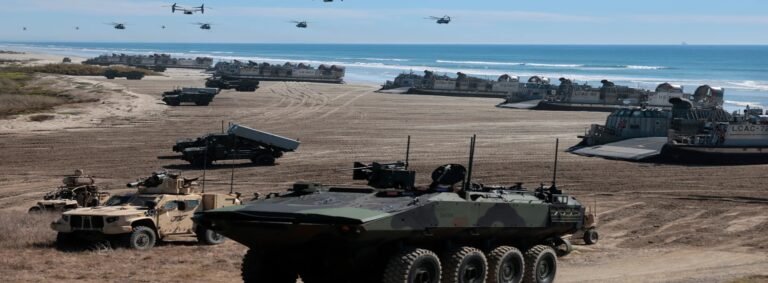
Furthermore, the Iranian military structure is designed to continue fighting in a decentralized manner through the networks of the Revolutionary Guard and the Basij, even if the regular army is weakened. Therefore, current U.S. plans rely on speed and surprise, utilizing helicopters and rapid evacuation capabilities rather than armored columns. This is intended to minimize the risk of casualties.
Impact, not occupation
Tsukerman concluded her analysis by emphasizing that the goal of these operations is not to defeat Iran militarily, but rather to change its behavior and eliminate specific threats. She indicated that the most realistic expectation is the continued deployment of US forces, enabling limited surgical operations in the event of a “triggering event.” She also asserted that this capability constitutes a strategic pressure tactic. She added, “The fundamental difference now lies in being prepared to have options for rapid intervention should the situation escalate, rather than preparing to invade and occupy a country the size of Iran.” She described this as “the difference between sending in an entire army and keeping a specialized force nearby to address a specific problem.”