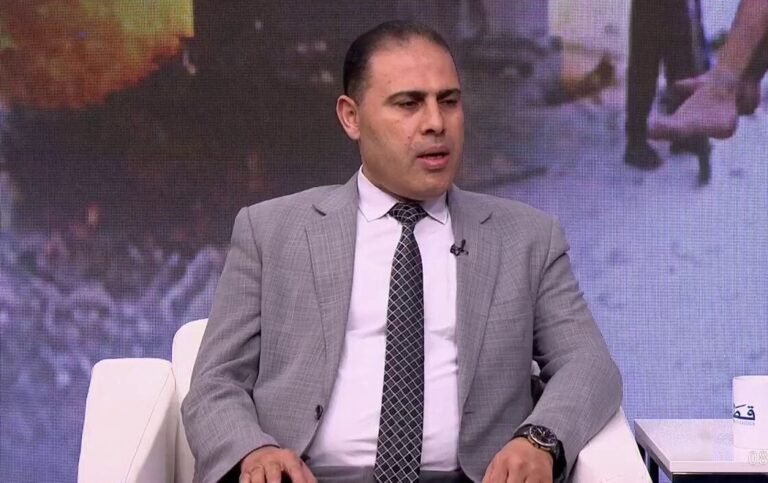
Cairo, Egypt – In his assessment of the American-Iranian conflict and its impact on the region, Dr. Hani Al-Basous, an expert in international relations, stated in special remarks to “Sawt Al-Emarat” that the pace of American bombing against targets inside Iran has witnessed a remarkable escalation in recent days.
American military escalation and its repercussions
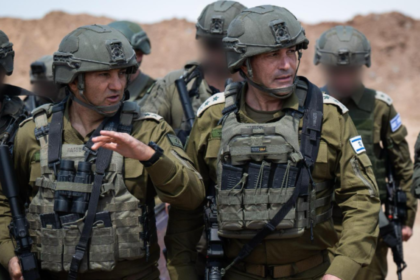
Al-Basous explained that these strikes were not limited to specific locations but extended to strategic facilities. This has negatively impacted the Iranian regime’s ability to manage the internal and external landscape. He emphasized that these operations have significantly contributed to weakening the ruling regime in Iran, both in terms of its military infrastructure and its moral and political influence. He added that the continuation of this approach could lead to further internal pressure on the Iranian leadership, especially given the economic challenges the country is facing.
Threats and deadlines
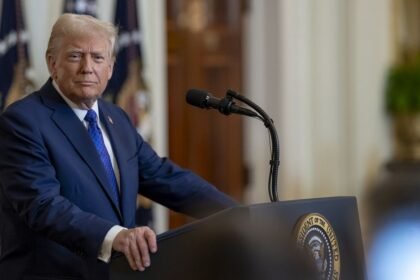
In a related context, Al-Basous pointed to the continued threats issued by Donald Trump, which include targeting energy facilities and vital infrastructure in Iran if the Strait of Hormuz, a crucial artery for global trade, remains closed. He explained that these threats were accompanied by successive deadlines: two days, then five days, culminating in the ten-day deadline, which is nearing its end. This places the region at a critical crossroads.
Diplomatic efforts and mediation
Al-Basous explained that there are ongoing efforts led by an international committee comprising Pakistan, Egypt, Turkey, and Saudi Arabia, aimed at reaching a preliminary ceasefire agreement. He noted that these efforts, despite their importance, still face significant obstacles. This is occurring amidst a widening gap between the positions of the two sides.
He clarified that Iran categorically rejects the fifteen points included in the American proposal, considering them an infringement on its sovereignty. Meanwhile, Tehran insists on a set of demands that he described as a “barrier” to any progress in the negotiations. This further complicates the chances of reaching a swift solution.
Future scenarios
Regarding future scenarios, Al-Basous presented two main possibilities. The first is the continuation of military operations for many weeks, which could lead to an expansion of the conflict.
In this context, he warned of the possibility that the Houthis might close the Bab al-Mandab Strait. This could threaten approximately 20% of global energy supplies and directly impact international trade, particularly for Europe, China, and India. Therefore, it might prompt international powers to intervene militarily to ensure the continued flow of maritime traffic.
The second scenario involves a unilateral US withdrawal after declaring its objectives achieved. Washington might promote this as a strategic victory, while Iran might seek to present it as proof of its resilience. He emphasized that this scenario could create a security vacuum in the region, further complicating the already strained relations between the Gulf states and Iran.
The impact of the war on the region
In closing, Al-Basous emphasized that the continuation of the war would have negative repercussions for all countries in the region, particularly the Gulf states, given its economic and military impacts. He also indicated that the region might be on the verge of a new power balance. These regional blocs could include Iran and its allies, such as the Houthis, Hezbollah, and some Iraqi factions. This would occur if the current situation persists without a clear resolution.