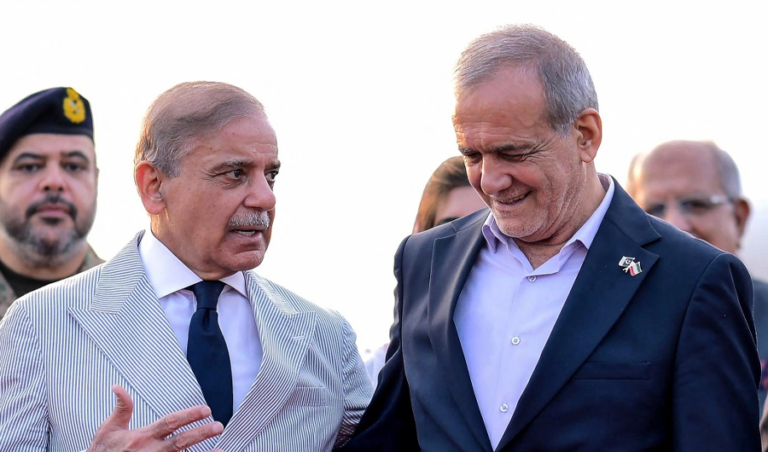
Islamabad, Pakistan – In a flurry of diplomatic activity aimed at containing the military escalation in the region, Pakistani Prime Minister Shehbaz Sharif held an extensive telephone conversation with Iranian President Masoud Pezeshkian on Saturday. The call, which lasted for more than an hour, focused on mediation efforts led by Pakistan in cooperation with Turkey and Egypt to end the US-Israeli conflict with Iran.
A three-way coordination to create a “favorable environment”
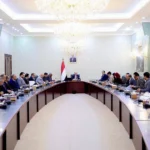
Sharif briefed the Iranian president on the details of the diplomatic efforts he is leading, along with Foreign Minister Ishaq Dar and Army Chief of Staff General Asim Munir. These efforts involve engaging with Washington and the capitals of the Gulf states. According to a statement from the Prime Minister’s office, this initiative aims to “create a conducive environment” that will ensure the conflict moves from the military arena to the negotiating table. Furthermore, the statement revealed that the Pakistani initiative has received “strong support” from influential international and Islamic parties.
Framework 15 and the challenge of building trust
This call comes after the Pakistani foreign minister confirmed that Islamabad is conveying indirect messages between Washington and Tehran. These messages include a “15-point American framework” currently under intensive discussion in Tehran. President Pezeshkian expressed his appreciation for Pakistan’s sincere efforts. He also stressed that “confidence-building” is the key to facilitating any successful mediation process, especially given the ongoing attacks targeting Iranian civilian infrastructure.
Humanitarian solidarity and an anticipated summit
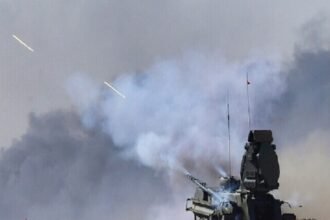
Shahbaz Sharif reiterated his country’s strong condemnation of the ongoing Israeli strikes, offering condolences for the more than 1,900 victims who have fallen since the start of hostilities. These efforts are set to culminate in Pakistan hosting the foreign ministers of Egypt, Saudi Arabia, and Turkey on March 29 and 30. These meetings aim to hold in-depth discussions to reduce tensions and ensure regional stability. This comes amid cautious hopes that “message diplomacy” will succeed in defusing the situation.