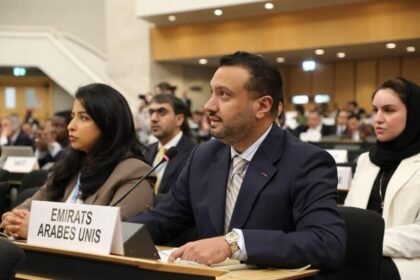
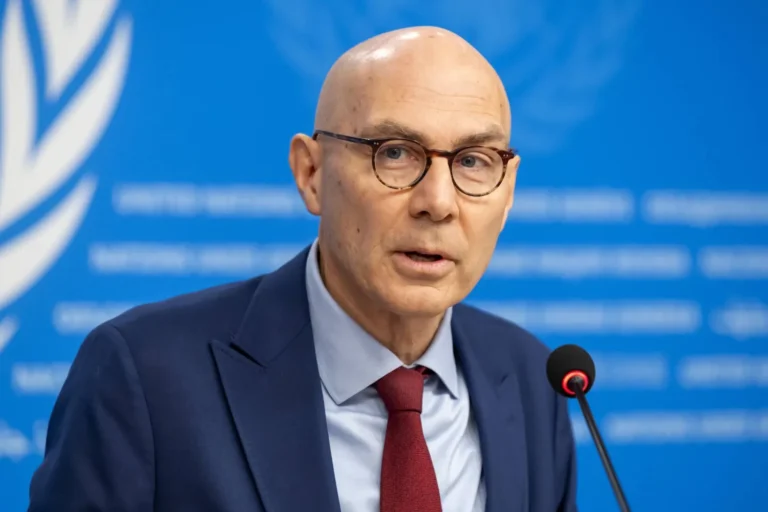
Geneva, Switzerland – The UN High Commissioner for Human Rights, Volker Türk, issued dire warnings on Wednesday as the regional conflict entered its 26th day. He stressed that the military escalation had reached unprecedented levels, threatening a complete humanitarian and security collapse in the Middle East.
The outcome of the war
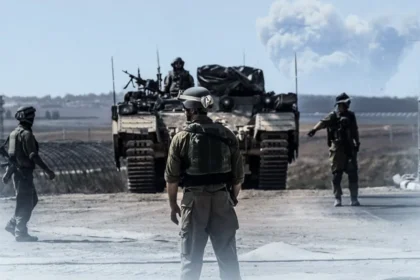
In a UN report issued by his office, Turk revealed that ongoing military operations against Iran and Lebanon have resulted in over 22,000 casualties, including both dead and wounded. The UN official explained that attacks targeting 31 provinces within Iran have killed 1,400 civilians and injured more than 20,000 others. Regarding Lebanon, Turk noted that over 1,000 people have been killed in the past three weeks alone due to intensified Israeli attacks. He also warned that the humanitarian situation there is on the verge of “complete collapse.”
Risk of targeting facilities
Turk stressed that targeting military sites near nuclear facilities represents a “dangerous slide” toward a full-blown regional confrontation that could become uncontrollable. He expressed deep concern about the economic and logistical repercussions of the conflict, warning that disruptions to energy markets and international shipping in the Strait of Hormuz could push some 25 million people in the region toward the risk of “acute hunger” due to the breakdown of food supply chains.
The risk of the war escalating
The High Commissioner emphasized that the flames of war are not confined to the immediate hotspots, but have spread to Iraq, Syria, and the Palestinian territories, considering the targeting of civilians a “blatant violation” of international law. He also noted that the attacks attributed to Iran have directly impacted the security of the Gulf Cooperation Council (GCC) states (the UAE, Saudi Arabia, Qatar, Kuwait, Bahrain, and Oman), as well as Jordan. These UN warnings come at a time of escalating military confrontations between the Israeli-American alliance on one side, and Iran on the other. This is occurring amidst urgent international calls for a ceasefire and a return to diplomacy to avert a regional humanitarian catastrophe, the outlines of which are becoming increasingly clear with the continued bombing and economic turmoil.