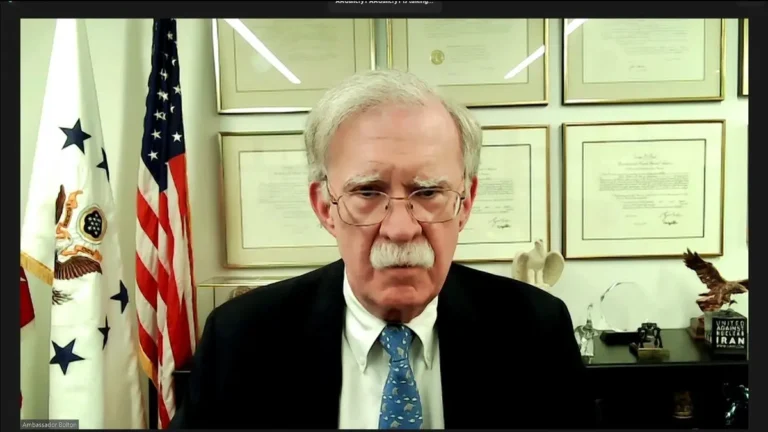
Washington, DC – John Bolton, former national security advisor to US President Donald Trump during his first term, sharply criticized the current administration’s military approach to dealing with Iran. He described the recent military strikes as “scattered” and lacking even a minimal level of careful strategic planning.
In a candid interview with the BBC, Bolton, known for his hawkish stance toward Tehran, expressed his dissatisfaction with the way the conflict was handled, saying, “It would have been better if it had been done the right way, not in the haphazard way Trump did it.” Bolton pointed to a lack of coordination both domestically and internationally. He explained, “The American people weren’t prepared, Congress wasn’t prepared, and, most importantly, our allies weren’t prepared for this kind of escalation.”
Despite being a historically prominent advocate for the use of military force against the Iranian regime, Bolton warned of the consequences of mismanagement. He pointed out that Tehran now possesses “tangible evidence” of its ability to influence the global economy through the Strait of Hormuz. He emphasized that closing the strait, through which approximately one-fifth of the world’s oil and liquefied natural gas supplies pass, represents a strategic pressure tactic in the hands of the Iranian regime.
Bolton added in his analysis: “While closing the Strait of Hormuz may not have the same deterrent power as nuclear weapons in intimidating the international community, it does grant the Iranian regime significant and direct control over oil flows from the Gulf.” He also emphasized that the regime’s continued rule, with its awareness of the extent of this influence, is a game-changer in the region. Bolton’s remarks come at a time when global markets and international intelligence agencies are awaiting the results of Operation Epic Wrath. This reignites the debate about the effectiveness of the “selective strikes” adopted by the current US administration, and whether this policy will undermine Iranian influence or push Tehran toward employing economic pressure tactics that could ignite the global energy market.