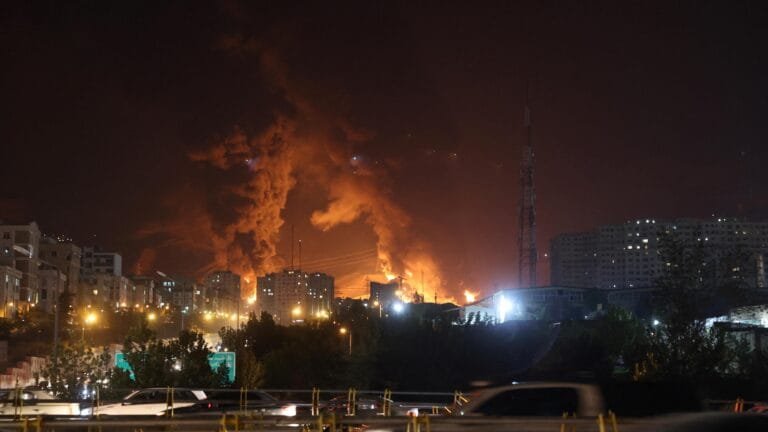
Tel Aviv, Israel – In a development reflecting the widening scope of the conflict between Israel and Iran, Tel Aviv announced it had carried out an airstrike targeting a facility within an Iranian university, which it said was used for research related to the nuclear program. This move reflects the escalation of the confrontation into a more sensitive arena, impacting scientific and academic infrastructure.
Israeli data indicated that the targeted site was not merely a traditional educational facility. Rather, it is part of a research network suspected of being involved in developing advanced technologies that could be employed in nuclear fields. Israel considers this a strategic threat that necessitates preemptive action.
What is striking about this strike is that it raises significant questions about the nature of the activities conducted within some academic institutions. It also raises questions about the boundaries between civilian scientific research and military applications, especially in light of repeated Western accusations against Tehran of using scientific cover to develop sensitive programs.
The strike, described as precise and targeted, is part of an Israeli strategy that relies on targeting vital hubs within the Iranian system, whether military or research-based. The aim is to slow any progress that could alter the balance of power in the region.
In contrast, the Iranian position remains shrouded in ambiguity, as sufficient details have not been released regarding the extent of the damage or the nature of the targeted facility. However, such operations are often met with calculated responses, both politically and militarily. This keeps the possibility of escalation alive.
Observers believe that targeting academic facilities carries implications that extend beyond the military strike itself. It indicates that the conflict is no longer confined to traditional battlefronts but has extended to the arenas of knowledge and technology, where universities are becoming points of contact in the struggle for influence.
The current situation reveals a new phase of the conflict, characterized by targeting “minds before weapons.” This phase aims to cripple the capacity for development before it transforms into a real threat. This foreshadows further complications in one of the region’s most complex crises.