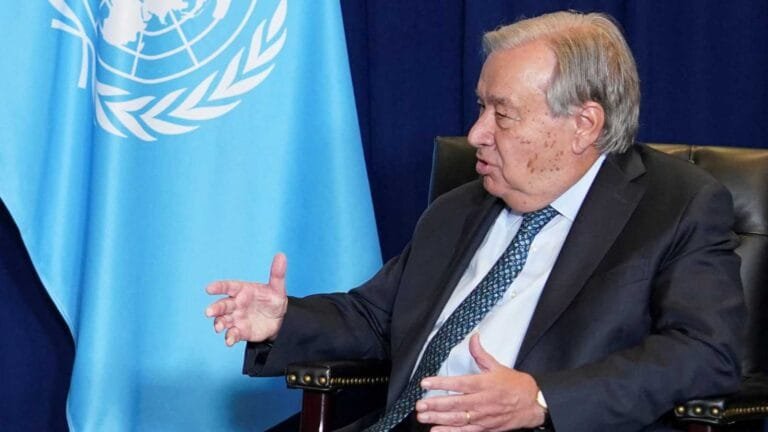
Brussels, Belgium – In a notable statement reflecting his efforts to regain international leadership amidst turbulent times of conflict, UN Secretary-General António Guterres announced that the United Nations is fully prepared to manage an international mechanism to protect the Strait of Hormuz. In an exclusive interview with Politico, Guterres revealed the formation of specialized working groups for this purpose. He also affirmed that the UN can play a pivotal role in de-escalating tensions and protecting this vital waterway, drawing parallels to the success of the Black Sea Grain Initiative.
An initiative to protect navigation and ignore Trump
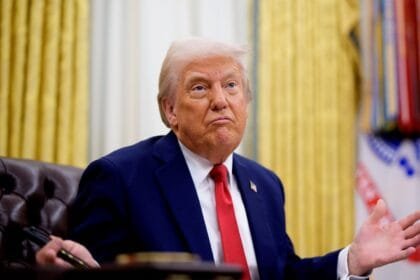
During his visit to Brussels for the European Council meeting, Guterres affirmed that the United Nations is engaged in intensive consultations with Gulf actors and the European Union to create conditions that guarantee the stability of navigation in the Gulf. Despite this independent approach, he emphasized his preference for “direct cooperation with the United States and major powers under the umbrella of international law.” As the Iranian crisis escalated, Guterres surprised many when asked about his contact with US President Donald Trump. He firmly replied, “No, no, no,” explaining that he communicates only with other officials in the US administration, without disclosing their identities. This reflects a clear diplomatic rift between the organization and the White House.
Gaza: Forced cooperation with “Trump’s personal project”
In an exclusive interview with Politico, Guterres acknowledged “effective” cooperation with the “Peace Council” established by Trump in September 2025. He described this cooperation as “technical and necessary,” focused solely on funding and rebuilding the Gaza Strip and its infrastructure. This was due to a prior Security Council mandate. However, this practical acceptance did not prevent the Secretary-General from launching a sharp attack on the Council’s political ambitions, calling it “President Trump’s personal project.”
Guterres criticized Trump’s attempt to appoint himself president for life of an organization he sees as an alternative to “failing” international institutions. He also asserted that individual control is not an effective way to address serious problems.
The Billion Dollar Council and the Global Divide
Guterres addressed the controversial structure of the Peace Council, which requires a $1 billion contribution for permanent membership. This financial and political condition has led to sharp divisions; major democracies such as Britain, France, Germany, and Canada have declined to join. Membership has been limited to countries like Belarus and Azerbaijan, while Russia and China have rejected the idea outright.3 Guterres concluded by emphasizing that any peace initiative must be rooted in international law and the values of the UN Charter. He also warned against turning diplomacy into a series of personal deals that undermine established institutions.