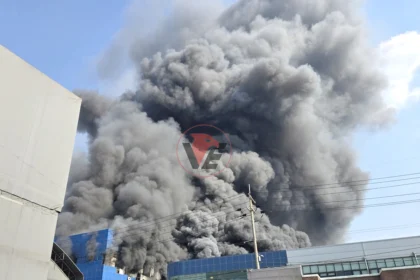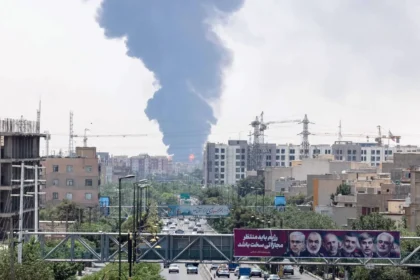
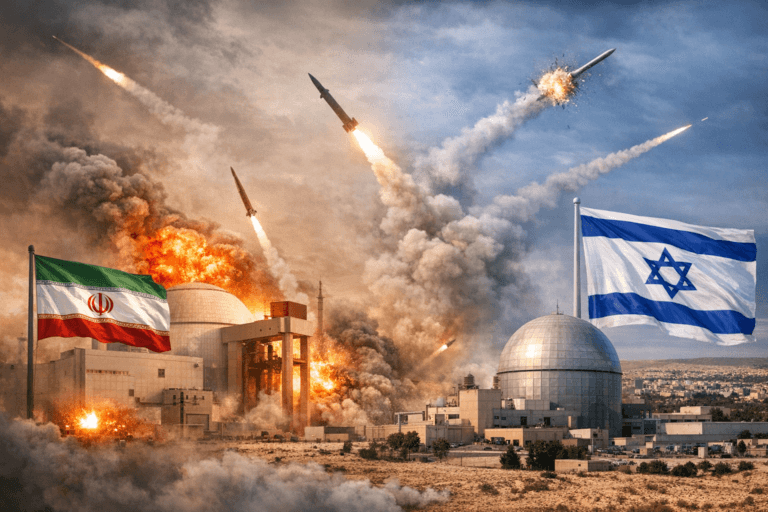
Dubai, UAE – The confrontation between the United States and Israel on one side, and Iran on the other, is escalating after the International Atomic Energy Agency confirmed that a projectile struck a site within the Bushehr nuclear power plant complex on March 17, 2026. The incident caused no damage to the plant or injuries to its workers. Meanwhile, reports on Saturday, March 21, 2026, indicated that more than 39 people were injured in Dimona, southern Israel. They were wounded by shrapnel and panic attacks during the Iranian missile strike.
Dimona enters the circle of threat
The arrival of Iranian missiles at Dimona gives this development a significance that extends beyond its immediate field dimension. This is because the city is located near one of Israel’s most sensitive facilities. Thus, the Dimona nuclear facility is now, in practical terms, closer to the range of the threat. There is not yet independent confirmation of a direct hit on the facility itself. This political and military significance is what makes the strike far more serious than simply missiles reaching a southern city within Israel.
Bushehr brings nuclear concerns back to the forefront
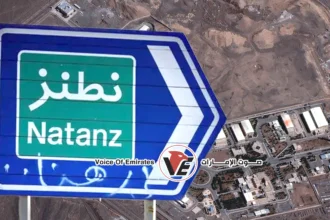
Conversely, the targeting of Bushehr and Natanz served as a stark reminder that approaching Iranian nuclear facilities is no longer a theoretical possibility. The International Atomic Energy Agency (IAEA) reported that a projectile landed inside the Bushehr complex without causing any reported operational damage. At the same time, the Associated Press reported that the Natanz nuclear facility was struck again. On the other hand, Israel denied responsibility for the attack, according to the same report. The sensitivity of this situation lies in the fact that Bushehr is an operational nuclear power plant, while Natanz is one of Iran’s most prominent enrichment sites. This means that targeting them together expands the scope of the danger from mere military strikes to a direct threat to Iran’s nuclear infrastructure at all levels. The IAEA also reiterated that armed attacks on nuclear facilities must never occur, given the potentially devastating radiological consequences.
What does it mean to bomb the reactors directly?
If the situation escalates to direct targeting of reactors or operating nuclear facilities and their supporting infrastructure, the region will not face a typical military escalation. Instead, there is the potential for the war to transform into an open-ended nuclear-security crisis. The primary danger lies in the possibility of an accident or radioactive leak, particularly in the case of an operational reactor like Bushehr. The IAEA has warned that any strike affecting the plant or even its external power lines could lead to an incident. Additionally, such an incident could have consequences both inside and outside Iran.
The second danger lies in the potential for a wider military response. This is because targeting such sites is typically interpreted as a direct attack on strategic deterrence, not merely a limited field strike. In this case, the repercussions would not remain confined to Iran and Israel. Rather, they could extend to the regional diplomatic and security spheres. As a result, there would be a higher likelihood of broader interventions and urgent international pressure to halt the escalation.
Expected regional and economic repercussions
The current escalation is not confined to Iran and Israel. The Associated Press reports that the conflict has entered its fourth week. Its effects are now extending beyond the military sphere to food, energy, and maritime shipping. Pressure is mounting on navigation in the Strait of Hormuz, and the state of alert in the Gulf is rising. As operations draw closer to nuclear and energy facilities, markets are becoming increasingly sensitive. Furthermore, the risk of spillover effects on oil prices, marine insurance, transportation, and regional supply chains is also growing.
Possible paths in the coming days
The first scenario is to maintain a high but controlled level of strikes, continuing to target military objectives while avoiding direct attacks on nuclear reactors. The second scenario involves expanding operations to include more strategic infrastructure, including energy facilities, ports, and the areas surrounding nuclear sites. This would prolong the war and increase its economic and human costs. The third and most dangerous scenario is for both sides to move to directly targeting reactors or operating nuclear facilities. Such a scenario would plunge the region into a crisis. This would mean military, radiological, economic, and diplomatic risks intertwine simultaneously.
Summary of the scene
The most dangerous indicator at this stage is not only the continued exchange of fire, but also the significantly shorter distance between missiles and nuclear facilities. Bushehr witnessed a projectile landing within its complex without any reported operational damage. At the same time, Natanz was subjected to renewed attacks, and Dimona saw missiles reach the city near its nuclear facility. This means that any further escalation could transform the confrontation from a highly dangerous war into an open regional crisis. In particular, the crisis could have potential nuclear dimensions.