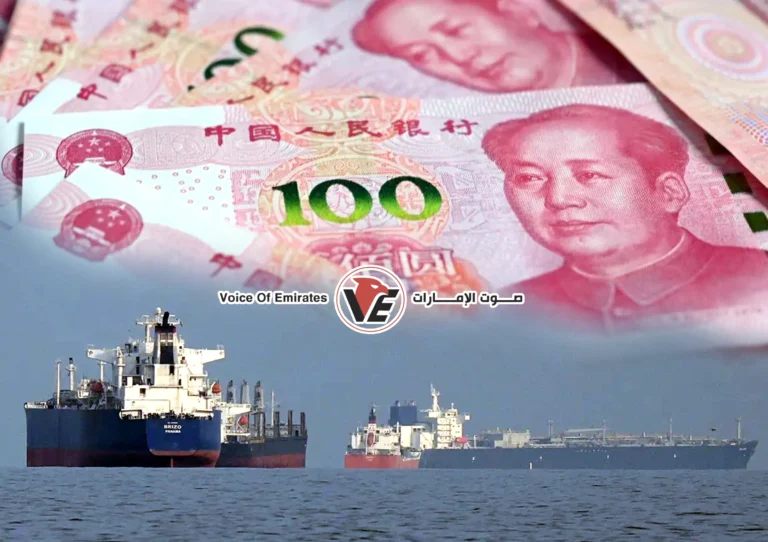
Tehran, Iran – In a strategic development reflecting Tehran’s efforts to transform the Strait of Hormuz into an economic and military pressure tool, CNN quoted a senior Iranian official as saying that Iran is considering issuing special licenses for a limited number of oil tankers to pass through the strait, provided that all financial transactions for these shipments are conducted in Chinese yuan.
Iranian conditions amid escalating tensions
This proposal came in the early hours of Saturday morning, coinciding with US President Donald Trump’s announcement of attacks targeting military sites on Iran’s Kharg Island.
Although Trump asserted that he had “so far” avoided targeting oil infrastructure,
he linked this exception to the continued safe passage of ships,
warning that any disruption to navigation would immediately change this stance and make oil facilities legitimate targets.
In response to Trump’s threats, the Iranian military position was swift.
The Khatam al-Anbiya Construction Headquarters announced that
any attack targeting energy infrastructure on Kharg Island would be met with fierce “retaliatory attacks”
that would not be limited to Iran but would also target regional facilities belonging to US-owned
or US-affiliated oil companies in the region, raising the specter of a full-blown regional energy war.
The Strait of Hormuz weapon and the turmoil in global markets
It appears that the Islamic Republic has already begun using the Strait of Hormuz as a strategic pressure tactic against Washington and Tel Aviv.
According to the Wall Street Journal, the Chairman of the US Joint Chiefs of Staff warned
that the outbreak of war would inevitably lead to the closure of the strait, a prospect that has begun to cast a shadow over global markets.
Oil prices have experienced sharp and volatile fluctuations during the past two weeks of the conflict,
prompting the G7 countries and the United States to consider emergency options for releasing oil reserves into the market to stabilize prices.
Iran’s move to link transit fees to the Chinese yuan is an attempt to break the dollar’s dominance
and secure trade channels with Beijing outside the Western financial system,
a gamble that complicates matters for the Trump administration, which finds itself caught
between the need to secure maritime navigation and the soaring energy prices.