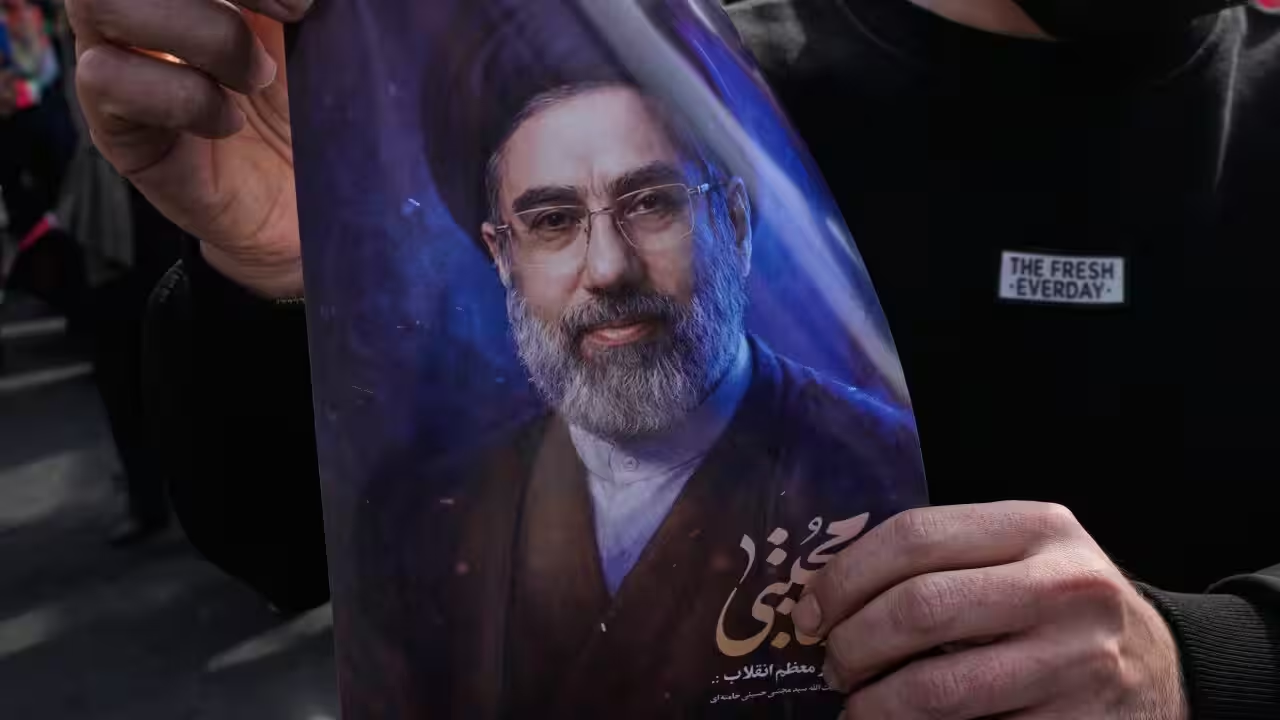
Tehran, Iran – At a sensitive time for the Iranian regime, amid deep international and intelligence concerns about its fate, a written message attributed to Mojtaba Khamenei, who succeeded his father as the third Supreme Leader of the Islamic Republic, has surfaced. This message comes amidst a complete absence of any public appearances or tangible indications of his health or physical condition. This absence has thus sparked a wave of speculation about the nature of the transitional phase the country is undergoing.
Military escalation and threats of renewed fighting
The message attributed to Mojtaba Khamenei contained unprecedentedly escalatory language, emphasizing the need to maintain the mechanism for closing the Strait of Hormuz as a strategic pressure tactic. The message stated: “The mechanism for closing the Strait of Hormuz must be maintained, and if necessary, we will open other fronts.” In his first written address, the new Supreme Leader stressed that Iran would not hesitate to take decisive defensive measures to protect its security. He added: “If the state of war continues, we are prepared to open other fronts, and we are not afraid of escalation if necessary.”
Rules of engagement with Washington and neighbors
In a striking paradox, the message attempted to distinguish between relations with neighboring countries and the American presence, stating: “We believe in friendship with our neighbors, but we target American bases and will undoubtedly continue to do so.” The message also included a threat to extract reparations from hostile forces. It indicated that if they refused, “we will take from the enemy’s property what we deem appropriate, and if that is not possible, we will destroy an equal amount of their property.”
The novel “The Clenched Fist” and the mystery of leadership
The letter touched on emotional and symbolic details concerning the late Supreme Leader Ali Khamenei. Mojtaba stated that he visited his father’s body after his “martyrdom,” saying, “What I saw was a mountain of strength, and I heard that his good hand was clenched in a fist,” a symbolic reference to the continuation of resistance until the very last moment. Regarding how he assumed power, the letter claimed that he learned of the Assembly of Experts’ decision to appoint him Supreme Leader through Iranian state television. This statement raises questions about the behind-the-scenes transfer of power under the current security circumstances.
Resistance as a strategic pillar
The message attributed to Mojtaba Khamenei concluded by reaffirming the regime’s ideological tenets, asserting that the “resistance front” is not merely a military tactic but a fundamental pillar and an integral part of the values of the Islamic Revolution. Despite the forceful language used in the message, observers of Iranian affairs believe that the absence of the “third Supreme Leader” from public view and the reliance on written statements on the thirteenth day of the war may indicate a deep crisis within the leadership. On the other hand, this move could represent an attempt to manage the conflict from “secret operations rooms,” avoiding direct confrontation, while the message calls upon the Iranian people to stand united in what it terms “effective and regrettable defense.”