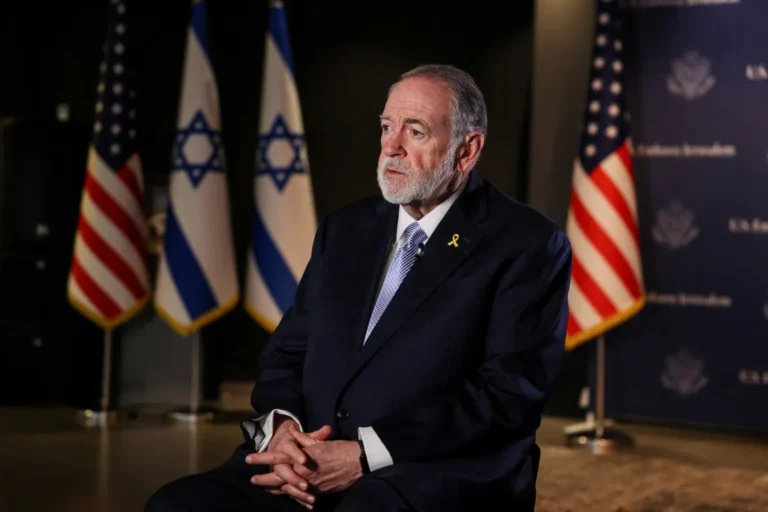
Washington, DC – US Ambassador to Israel Mike Huckabee’s remarks regarding what he termed Israel’s “biblical right” to the land have sparked widespread outrage. Washington quickly asserted that his comments were “taken out of context” and do not reflect a change in US policy.
Huckabee’s remarks came during an interview with journalist Tucker Carlson. Carlson referenced a biblical passage describing God’s promise to the Prophet Abraham of a land stretching from the Nile Valley to the Euphrates River. This area encompasses large parts of the Middle East.
Huckabee responded that he wasn’t certain it would extend that far, “but it would be a large piece of land.” He added that Israel is “a land God gave to a chosen people,” and said it would be “acceptable if they took it all,” referring to the aforementioned territory.
Official US clarification
A spokesperson for the US embassy said the ambassador’s remarks were taken out of context. He emphasized that there has been no change in the United States’ position toward Israel or its stated policies regarding regional issues.
Huckabee is considered a close confidant of US President Donald Trump. As a result, the remarks were deemed more sensitive and raised questions about their political implications.
Arab and Islamic condemnations
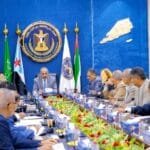
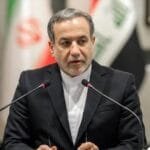
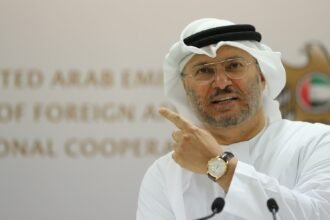
In response, a joint statement was issued by the UAE, Egypt, Saudi Arabia, Jordan, Bahrain, Qatar, Indonesia, Pakistan, Turkey, Syria, Kuwait, Lebanon, Oman, and the Palestinian territories, in addition to several Arab bodies. The statement described the remarks as “dangerous and inflammatory,” threatening the stability of the region.
The statement emphasized that these remarks contradict the vision presented by the US president. This vision, according to the statement, is based on containing the escalation and creating a political horizon for a comprehensive settlement that guarantees the establishment of an independent Palestinian state.
These developments come amidst escalating regional tensions. Consequently, any statements concerning the borders or sovereignty of the region’s countries become subject to extensive political scrutiny and immediate reactions.