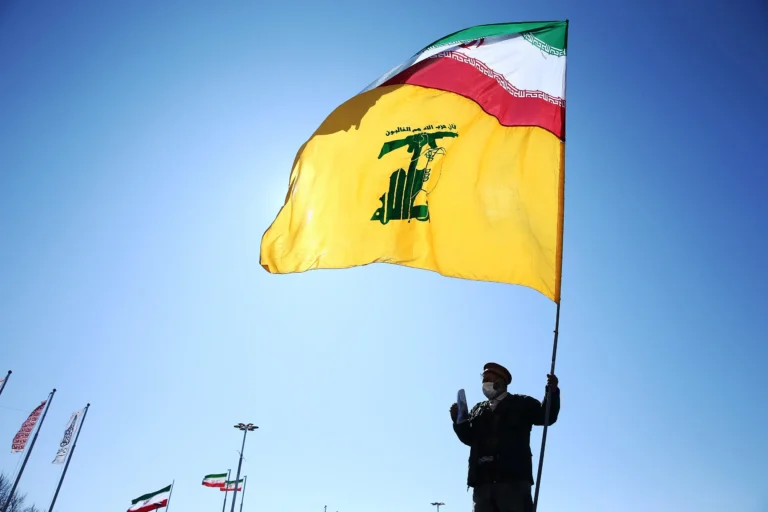
Beirut, Lebanon – Media reports and rapidly unfolding developments on the ground have revealed a strategic shift in the leadership structure of the Lebanese Hezbollah. This comes in conjunction with intense Israeli strikes targeting the group’s strongholds in the Bekaa Valley. There are also indications of an impending, full-scale regional confrontation.
Direct Iranian management of operations
Al-Arabiya reported that Hezbollah is now being directly run by officials and officers from the Iranian Revolutionary Guard.
The report indicated that this shift resulted from the recent arrival of Iranian officers in Lebanon to join existing teams.
They are also overseeing the rebuilding of the party’s operational capabilities and direct field planning.
Iran is pressuring Hezbollah to fully شparticipate in any future military campaign against it.
Bekaa earthquake
On the ground, the Israeli army carried out an air operation, which it described as a “prelude to a broader offensive.”
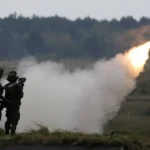
Warplanes targeted three command centers in the Bekaa Valley with six heavy bombs, dropped simultaneously.
According to military and Lebanese sources, a “large number” of Hezbollah members were killed while planning the deployment of missile launchers.
Hezbollah released the names of its dead, including field commander Hussein Muhammad Yaghi (Abu Ali Sadiq), Qassem Mahdi, Ahmad al-Hajj Hassan,
Hussein Alaeddine, Ali al-Moussawi, Muhammad al-Moussawi, Ahmad Zaiter, and a number of other field commanders.
Political stance: “The patience of the resistance”
In his first comment on these developments, Mahmoud Qamati, a member of Hezbollah’s political council, affirmed the party’s commitment to the option of confrontation despite the current escalation.
He stated, “Our choice will remain resistance, even if we are exercising patience today.
Our prisoners will not remain in Israeli jails, and the occupation of our land will not continue.”
Observers believe that the airstrikes in the Bekaa Valley, linked to reports by the Israeli news site Ynet,
indicate that Israel and the United States may be coordinating a “dual” military operation.
This would target Iranian proxies in Lebanon, coinciding with potential strikes inside Iran. Consequently, this situation has placed the region on the brink of a major conflict.