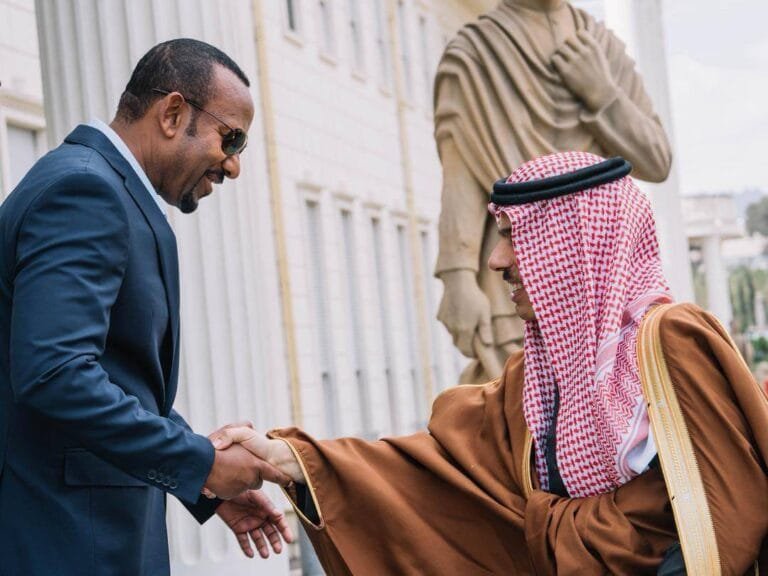
Addis Ababa, Ethiopia – The website LibanGate revealed details of a meeting it described as “stormy” between Ethiopian Prime Minister Abiy Ahmed and Saudi Foreign Minister Faisal bin Farhan in the Ethiopian capital, Addis Ababa. The meeting addressed sensitive regional issues, primarily developments in Sudan and Ethiopian-Emirati relations.
Background of the meeting and previous tensions
According to the website LibanGate, the Saudi side requested a meeting with Abiy Ahmed in the Kingdom in early February. Addis Ababa also dispatched its Foreign Minister, Gideon Timotheos, to Riyadh on February 2, 2026.
During the meeting, the Saudi minister raised the issue of strategic relations between Ethiopia and the United Arab Emirates. According to the minutes, he asserted that Abu Dhabi was negatively impacting the security of the Kingdom and the region, particularly in Sudan. Therefore, he called for a reduction in the level of strategic cooperation with the UAE.
The website reported that the Ethiopian response emphasized that these disagreements were an “internal Gulf matter.” It also affirmed that relations with the UAE were “based on solid foundations.” Ethiopia clarified that Abu Dhabi had been a reliable partner. However, Ethiopia expressed its desire to develop a similar relationship with Riyadh.
Economic measures and diplomatic escalation
Libangit noted that Riyadh subsequently imposed economic restrictions affecting the movement of goods. No further official response was issued from Addis Ababa before a direct meeting between Abiy Ahmed and the Saudi minister on February 10 in Addis Ababa to discuss the repercussions of the move.
Sudan: The Focus of the Confrontation
According to the website, the discussion centered on the Sudanese issue. The Saudi minister accused the UAE of supporting Rapid Support Forces commander Mohamed Hamdan Dagalo, known as “Hemedti,” and considered this a threat to Saudi national security.
According to the published minutes, Abiy Ahmed responded sharply. He emphasized that his country’s position on Sudan was “linked to its national security.” He also explained that Addis Ababa supports Hemedti in confronting what he described as “Islamic extremist groups” linked to the head of Sudan’s Sovereign Council, Abdel Fattah al-Burhan. He asserted that the Kingdom was “geographically distant from the details of the situation.”
Defending the relationship with Abu Dhabi
As reported by Le Panhellenic, the Saudi minister warned of the “dangers of Emirati policy.” However, Abiy Ahmed defended his relationship with UAE President Mohammed bin Zayed Al Nahyan, emphasizing that he had tested his support in the “most difficult circumstances.” He explained that the relationship is based on mutual loyalty.
According to the same source, he added that Abu Dhabi did not impose any conditions that would compromise Egyptian security or relations with the Arab world during the Grand Ethiopian Renaissance Dam (GERD) crisis. He also noted his commitment to not harming Egypt’s water share.
A message to the Saudi leadership
According to the newspaper Lepanget, Abiy Ahmed concluded the meeting with a message to Saudi Crown Prince Mohammed bin Salman, emphasizing that Ethiopia “will not allow terrorism to threaten its security.” He called for a focus on development and economic issues instead of regional escalation.
There has been no official comment yet from Riyadh or Addis Ababa regarding the published report.